

TL;DR: June 2026 has produced three landmark signals for the global AI economy in a single week: Mistral AI (French AI startup) is reportedly raising €3 billion at a €20 billion valuation; Prometheus (a new venture backed by Jeff Bezos, former Chief Executive Officer of Amazon) has secured $12 billion to build what it calls an "artificial general engineer" for the physical world; and SpaceX (aerospace company founded by Elon Musk) officially priced its initial public offering (IPO) shares at $135, making it the largest IPO in recorded history.
For Vietnam, this convergence of AI investment in Vietnam is not abstract news. Every dollar poured into frontier AI models, physical AI, and tech IPOs accelerates demand for the structured, machine-readable data that makes those systems work. This post maps the three events, explains the underlying dynamics, and draws the line to Vietnam's emerging data economy.
Table of Contents
- Is 2026 the Year AI Investment Goes Mainstream?
- What Is Mistral AI's €3 Billion Raise and Why Does It Matter?
- Who Is Prometheus and What Is Jeff Bezos Building for $12 Billion?
- How Does SpaceX's Record IPO Connect to the AI Economy?
- Why AI Investment Vietnam 2026 Signals a Data Demand Surge
- How DataCore Serves Vietnam's AI Data Economy
- Frequently Asked Questions
Is 2026 the Year AI Investment Goes Mainstream?
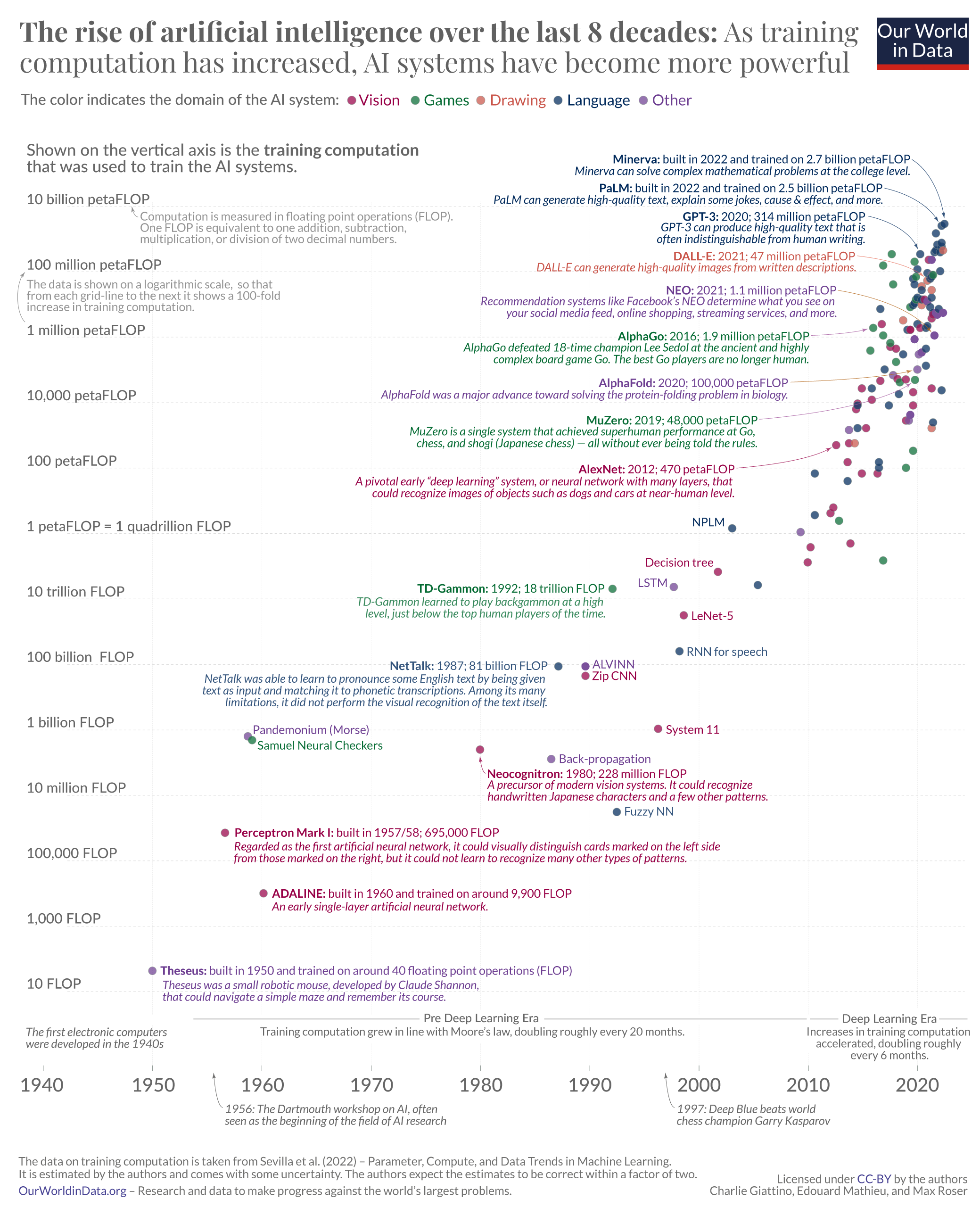
The term "AI supercycle" describes a period in which investment in artificial intelligence compounds faster than in prior technology cycles. We saw a preview in 2023 and 2024 with the surge of large language model (LLM) startups and GPU (graphics processing unit) cluster financing. But the events of June 2026 suggest the cycle has shifted from experimentation to industrial-scale capital deployment.
Three datapoints illustrate this. First, Mistral AI - a Paris-based AI research startup founded in 2023 that competes directly with OpenAI and Anthropic in the frontier model space - is rumored to be closing a fundraising round of €3 billion at a post-money valuation of €20 billion (as reported by TechCrunch, 12 June 2026).
Second, Prometheus - a new startup backed by Jeff Bezos, former Chief Executive Officer and founder of Amazon, Inc. - disclosed that it raised $12 billion USD to build an "artificial general engineer" capable of designing, analyzing, and optimizing systems in the physical world. Third, SpaceX - the rocket and satellite internet company founded by Elon Musk in 2002 - priced its highly anticipated initial public offering at $135 per share, giving it a valuation of approximately $1.77 trillion USD and making it the largest IPO in history (as of 12 June 2026).
Together, these three events represent more than $15 billion USD committed to AI-adjacent ventures in a single week. The pattern is clear: institutional capital is no longer testing AI - it is scaling it.
AI investment in Vietnam is therefore part of this global story, not separate from it. When frontier AI companies scale, they need data. When physical AI systems go to production, they need structured knowledge about the world - addresses, companies, legal entities, geospatial boundaries, financial relationships. This is the category where Vietnam can, and must, compete.
What Is Mistral AI's €3 Billion Raise and Why Does It Matter?
Mistral AI, founded in April 2023 by former researchers from DeepMind (Alphabet's AI research subsidiary) and Meta Platforms' FAIR (Fundamental AI Research) lab, has positioned itself as the European alternative to US-dominated frontier AI. Its models - including Mistral 7B, Mixtral 8x7B, and the more recent Mistral Large and Le Chat assistant - are notable for being partially open-weight and for matching or exceeding the performance of larger models on benchmark tests.
A €3 billion raise at a €20 billion valuation (approximately $21.6 billion USD at the exchange rate as of 12 June 2026) would make Mistral one of the most valuable AI-native startups in Europe, and among the top five globally by last reported valuation. For context, Mistral's previous financing round valued the company at approximately €6 billion in mid-2024. A tripling of valuation in roughly 18 months reflects two things: genuine technical progress on the model side, and a market conclusion that the frontier AI space will consolidate around a small number of non-US players.
Why does this matter for AI investment in Vietnam? Because Mistral's raise is a proxy signal for how global investors are pricing AI infrastructure overall. Every €3 billion that goes into model training needs to be fed by data: pretraining corpora, instruction-tuning datasets, retrieval-augmented generation (RAG) knowledge bases, and evaluation sets. The more capital flows into AI models, the greater the derivative demand for high-quality, structured, machine-readable data - the kind that Vietnam is uniquely positioned to supply for its own regional market.
Vietnam's AI ecosystem - anchored by players like VNG Corporation (operator of Zalo, Vietnam's largest domestic messaging platform), FPT Corporation (a listed technology conglomerate with over 50,000 employees), and Viettel Group (the state-owned telecommunications giant) - is already investing in LLMs and AI applications. Each of these players needs local data to make their models competitive. AI investment in Vietnam means domestic demand for Vietnam-specific structured data is rising in parallel with global demand.
Who Is Prometheus and What Is Jeff Bezos Building for $12 Billion?

Prometheus is the most recent - and arguably most ambitious - AI venture to emerge from the current supercycle. The company, backed by a $12 billion USD financing round and reportedly anchored by Jeff Bezos (who stepped down as Amazon CEO in 2021 but remains one of the world's most active technology investors through his investment firm Bezos Expeditions), is building what it calls an "artificial general engineer" for the physical world.
The concept differs from general-purpose LLMs in a critical way. While ChatGPT (OpenAI) or Claude (Anthropic) are designed to answer questions, draft text, and reason in natural language, an "artificial general engineer" is designed to reason about physical systems - designing components, modeling stress tolerances, optimizing manufacturing processes, and simulating outcomes in the material world. Think of it as an AI that can do the work of a structural engineer, a chip designer, or an urban planner, rather than the work of a writer or analyst.
This type of AI requires different training data than language-based AI. It needs physics simulations, engineering schematics, materials science databases, geospatial data, satellite imagery, and urban infrastructure maps. Several of these data categories are directly relevant to the Vietnamese market. Vietnam's rapid urbanization - with over 10 million people in Ho Chi Minh City (formally known as Thanh pho Ho Chi Minh, or HCMC) and a second-tier city construction boom - generates continuous geospatial and infrastructure data at a scale that feeds physical AI systems. This makes AI investment in Vietnam directly relevant to the physical-engineering sector.
AI investment in Vietnam in the physical-AI segmentent may be less visible than LLM fundraises, but the downstream data demand is just as real. Companies building digital twins of Vietnamese cities, supply-chain optimization tools for Vietnamese manufacturers, or flood-risk models for the Mekong Delta (Dong bang song Cuu Long) will all need the kind of structured, location-anchored data that forms the foundation of any physical AI system.
How Does SpaceX's Record IPO Connect to the AI Economy?
SpaceX's IPO at $135 per share - valuing the company at approximately $1.77 trillion USD as of 12 June 2026 - is the largest public market debut in history. For more than 4,400 SpaceX employees who hold equity, the listing creates a path to life-changing wealth (VnExpress, 12 June 2026). For the broader technology economy, it signals something more structural: the era of AI-era tech IPOs has arrived.
SpaceX's connection to AI is direct. Its Starlink satellite internet service - which now covers over 100 countries and has more than 4 million subscribers - is a data infrastructure platform. Starlink connectivity extends broadband access to regions previously served only by expensive terrestrial links, including parts of Southeast Asia. More broadband reach means more data generation; more data generation means more demand for the analytics, structured data products, and AI applications that sit on top of that connectivity layer. AI investment in Vietnam benefits directly from this expanded connectivity.
But the IPO's significance for AI investment in Vietnam is also about market psychology. When a company like SpaceX trades on public markets at a $1.77 trillion valuation, it validates the thesis that AI-era infrastructure is worth owning. That validation typically causes institutional investors to rotate into the broader AI theme - including companies across the AI value chain in emerging markets. Vietnam, as one of Southeast Asia's fastest-growing digital economies (Vietnam's digital economy grew by approximately 28% in 2024 according to the Google-Temasek-Bain e-Conomy SEA report), sits squarely in the path of that capital rotation.
The IPO summer of 2026 - with SpaceX, Anthropic, and OpenAI all rumored or confirmed to be pursuing public listings - also puts a floor under the AI talent and capital market. It means the AI investment cycle has duration; it is not a brief speculative episode but a multi-year structural shift.
Why AI Investment Vietnam 2026 Signals a Data Demand Surge
The linkage between global AI capital deployment and local data demand in Vietnam runs through three channels. This shift is central to understanding AI investment in Vietnam and its implications for the regional data economy.
The first channel is domestic AI product development. When Vietnamese enterprises - banks, insurance companies, logistics firms, state agencies - build or buy AI applications, they need training data, validation data, and production inference data that reflects Vietnamese reality. A credit-scoring model trained on US or European data will perform poorly on Vietnamese loan applicants. A corporate risk model that cannot read Vietnamese business registration records is useless for a Vietnamese bank's compliance team. AI investment in Vietnam in domestic applications drives demand for Vietnam-specific structured data.
The second channel is foreign AI companies entering Vietnam. As global AI firms expand into Southeast Asia, Vietnam's population of 99 million people (as of 2026), its rapidly growing middle class, and its export-manufacturing base make it a priority market. Foreign AI entrants need local data partnerships to build compliant, locally relevant products. This creates a demand signal for organizations that hold structured Vietnamese data. This is the core opportunity created by AI investment in Vietnam.
The third channel is data-for-AI services. Beyond selling data directly, Vietnamese organizations can offer data curation, annotation, and quality assurance services to global AI companies. This is already happening - Vietnam has an established software outsourcing base (Vietnam ranked 6th globally in the A.T. Kearney Global Services Location Index as of 2023) and is increasingly moving up the value chain into AI-specific data work. AI investment in Vietnam accelerates this transition.
All three channels share a common prerequisite: reliable, structured, machine-readable Vietnamese data at scale. That is the infrastructure gap that DataCore is building to close. This shift is central to understanding AI investment in Vietnam and its implications for the regional data economy.
How DataCore Serves Vietnam's AI Data Economy
DataCore is Vietnam's financial and business data platform, designed to serve the data needs of the AI-era economy. As demand for structured Vietnamese data grows, DataCore's product suite addresses several of the most acute gaps created by this wave of AI investment.
The momentum of AI investment in Vietnam is clear. As it reshapes demand for structured data, Vietnamese businesses are adapting. For more context on how this is reshaping business data strategy, and how businesses are adapting their data infrastructure, see our recent analysis: How Vietnamese Fintechs Are Re-Wiring KYB Onboarding and How Vietnam's 2025 Commune Merger Broke Bank Address Cleanup.
Company Intelligence Service provides structured data on Vietnamese legal entities - business registration records, ownership structures, financial summaries, and industry classifications - across more than 800,000 registered companies. For AI applications that need to reason about the Vietnamese business landscape, Company Intelligence Service is a foundational data layer. Credit AI, fraud detection AI, and supply-chain AI all depend on accurate, up-to-date company data.
The eKYC Service (electronic Know Your Customer service) enables identity verification at scale, a requirement for any AI-powered financial application operating in Vietnam under the State Bank of Vietnam (SBV) Circular 17/2024/TT-NHNN on digital banking. As AI investment in Vietnam flows into fintech and banking applications, eKYC becomes the trust layer that ensures AI systems are operating on verified identities.
DataCore's data subscriptions - covering seven domains including Economy, Markets, People, Location, Organization, Media, and Geospatial - provide the broad structured data inputs that LLM fine-tuning and RAG (retrieval-augmented generation) pipelines require. Every Mistral-class or Prometheus-class AI system that wants to answer questions about the Vietnamese market will need access to this kind of data - a direct consequence of AI investment in Vietnam demand.
The AI investment supercycle of 2026 is, in effect, a demand signal for DataCore's entire product suite. The question is not whether Vietnamese data will be needed - it will be - but who will supply it at the quality and scale that AI investment in Vietnam requires.
Frequently Asked Questions
What is the AI investment supercycle and how does it affect Vietnam in 2026?
The AI investment supercycle refers to the current multi-year period of accelerating capital deployment into artificial intelligence infrastructure, models, and applications. In June 2026, three events crystallized this trend: Mistral AI's reported €3 billion raise, Prometheus's $12 billion round, and SpaceX's record $135 IPO. For Vietnam, the supercycle creates derivative demand for structured, machine-readable Vietnamese data - the input that AI systems need to perform in the local market. Vietnam's emerging AI market is therefore both a global story and a local opportunity.
Why did Mistral AI raise €3 billion and what does it plan to do with the funds?
Mistral AI, a Paris-based AI startup competing with OpenAI and Anthropic, is reported to be raising €3 billion at a €20 billion post-money valuation (TechCrunch, 12 June 2026). The company has historically used funding to expand model training compute, grow its enterprise sales operation (Le Chat Business), and extend its open-weight model releases. A raise of this size would likely fund a next-generation frontier model training run, expand Mistral's data center footprint, and accelerate its expansion into the enterprise API market outside Europe.
What is Prometheus and why is Jeff Bezos investing $12 billion in physical AI?
Prometheus is a startup described as building an "artificial general engineer" - an AI system designed to reason about and optimize physical systems rather than language. Jeff Bezos, former Chief Executive Officer of Amazon and founder of Blue Origin (aerospace company), is among its backers. The $12 billion raise reflects a thesis that AI reasoning about the physical world - materials, infrastructure, manufacturing - represents the next major application frontier after language AI. This is relevant for Vietnam because physical AI systems require geospatial, industrial, and infrastructure data that mirrors local conditions.
How does SpaceX's IPO at $135 per share relate to the AI economy?
SpaceX's IPO, which priced at $135 per share and values the company at approximately $1.77 trillion USD (as of 12 June 2026), is relevant to the AI economy through two channels. First, SpaceX's Starlink satellite internet service is a global data infrastructure platform that extends broadband connectivity and therefore data generation to underserved regions, including parts of Southeast Asia. Second, the IPO validates AI-era technology valuations on public markets, which tends to attract additional institutional capital into the broader AI investment theme - including into emerging market AI and data companies.
How can Vietnamese companies benefit from the global AI investment trend in 2026?
Vietnamese companies can benefit from the global AI investment trend through three routes: building AI-native products for the domestic market (where local data is a competitive moat), partnering with or supplying data to foreign AI companies entering Vietnam, and offering AI data services - annotation, curation, quality assurance - to global AI training pipelines. All three routes require access to high-quality structured Vietnamese data, which is the core asset that data platforms like DataCore are developing at scale. AI investment in Vietnam creates the demand; domestic data infrastructure creates the supply.
Sources
- TechCrunch - "Mistral is rumored to be raising €3B at €20B valuation", 12 June 2026. techcrunch.com
- TechCrunch - "Jeff Bezos's Prometheus raises $12B to build an 'artificial general engineer' for the physical world", 12 June 2026. techcrunch.com
- TechCrunch - "SpaceX officially prices shares at $135 in the largest IPO ever", 12 June 2026. techcrunch.com
- VnExpress - "Hon 4,400 nhan vien co the thanh trieu phu nho SpaceX IPO", 12 June 2026. vnexpress.net
- VnExpress - "UOB: Nen kinh te Viet Nam 'ben bi'", 12 June 2026. vnexpress.net







Để lại một bình luận
You must be logged in to post a comment.