
Why the Commune Merger Quietly Broke Bank Data
Vietnam's 2025 commune merger reform took effect on schedule, and customer-address tables at most banks rolled forward unchanged. Three months later, KYC reconciliations started flagging mismatches against the new gazette. The commune merger backfill is not a re-write. It is a one-time backfill plus a recurring sync, provided the data infrastructure underneath supports point-in-time queries.
The Commune Merger Data Picture
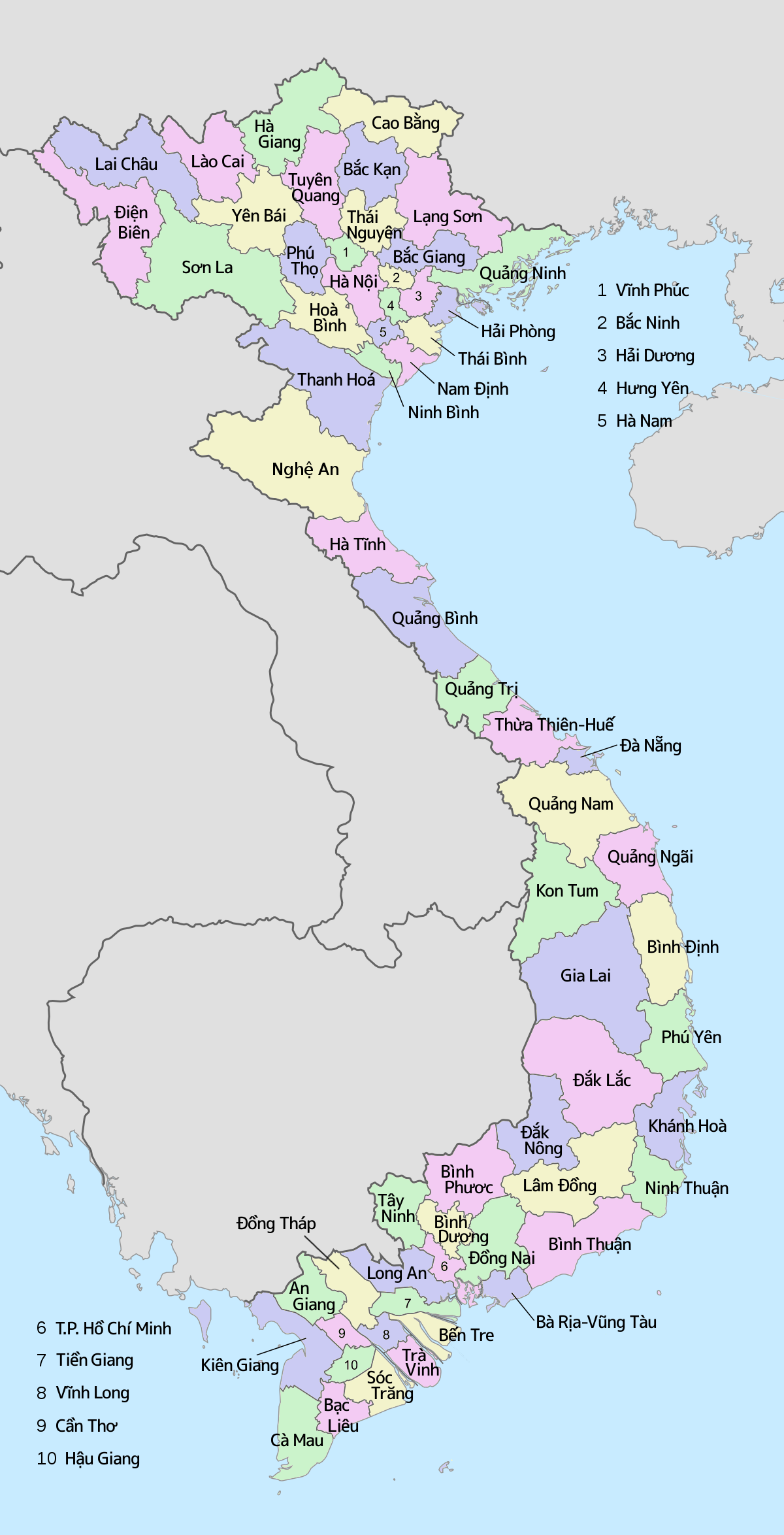
Vietnam's administrative-unit system was consolidated in 2025 to 11,162 communes and wards spread across 705 districts and 63 provinces (DataCore Cadastral Services, July 2025 cadastral figures). The DataCore Cadastral dataset covers boundaries from 2005 to present and updates daily from official documents (DataCore service page, 2026).
Two stats matter for bank data teams approaching the commune merger backfill:
- Tick data depth. DataCore has held HOSE/HNX/UPCOM market data since 2005, eight-plus years of operation, ~1,648 HOSE firms in fundamentals coverage (DataCore corporate factsheet, 2026). The same point-in-time discipline applied to market data is what cadastral data needs.
- Audit horizon. Circular 41/2016/TT-NHNN sets capital-adequacy reporting requirements that depend on resolving customer addresses at the date of origination, not today's date. Examiners ask the date question; the data layer either answers it or it does not.
Five Steps for the Commune Merger Cleanup
- Inventory the address fields. Every table that stores a customer address (KYC core, credit decisioning, branch-network analytics, AML watchlist matching) gets logged. Each one becomes a target for backfill.
- Add
commune_idandeffective_datecolumns. Do not rewrite the original address string. Add structure alongside it. - Backfill from a point-in-time boundary dataset. For each historical record, resolve "what commune was this address in, on the date the record was created?", not "what commune is this address in today?".
- Set up a quarterly delta sync. Ward boundary changes do not stop with the 2025 reform. Run a monthly diff against the canonical dataset and apply boundary updates without touching the raw address.
- Document the audit trail. Save a hash of the boundary dataset version used for each backfill batch. When an examiner asks "ward X as of 2017", the lookup resolves and the source is provable.
VN Case Sketch (Illustrative)
A mid-sized bank with several million KYC records ran a post-merger reconciliation in late 2025. The first pass flagged a meaningful share of records as "ward not found" because the address string was textually correct for the date of origination but did not match the post-commune-merger gazette. The cleanup the team adopted was the five-step commune merger pattern above. Two follow-on benefits beyond compliance: branch-territory plans rebuilt against current commune codes, and credit-rule decision tables versioned with effective-date semantics, so 2017 contracts re-evaluate against 2017 boundaries during audit replay. (Pattern is illustrative; specifics anonymized.)
How DataCore Fits Into the Commune Merger Backfill
DataCore Cadastral Services exposes the administrative-boundary layer as an API with point-in-time queries (as_of_date parameter), GeoJSON polygons, and Excel exports. Pricing starts at $19/month on the Starter tier, $99 on Dev, $499 on Pro, with Enterprise custom and an Academic tier at VND 3M/month for COR3, Scholars, and partner faculty programmes (DataCore pricing page, 2026). The 10-day free trial covers up to 10 queries per day at no cost.
Getting Started With the Commune Merger Backfill
Pull the boundary dataset for the regions your KYC tables cover, run the commune merger backfill on a sample of 1,000 records first, and measure the mismatch rate before scaling. Try the Cadastral free trial. For the broader DataCore platform, see the services overview. For implementation case studies and weekly notes, follow DataCore’s guide to Vietnamese administrative boundary data mistakes.
What the Commune Merger Actually Changed
The 2025 commune merger redrew Vietnam's administrative map, consolidating thousands of communes and wards into a smaller, renamed set. For citizens the change is mostly cosmetic, but for any system that stores an address as text, it is a silent break. A record captured under the old gazette still reads as valid, yet it now points to a commune that no longer exists by that name. Multiply that across millions of customer rows and the commune merger becomes a data-integrity problem hiding in plain sight.
Crucially, the commune merger did not invalidate the historical address. The customer really did live in that old commune on the date the record was created. The mistake teams make is treating the merger as a find-and-replace, overwriting old values with new ones. That destroys the very history a regulator will later ask you to reproduce.
Why Customer-Address Tables Broke
Most banking systems store an address as a free-text string plus, at best, a code that assumes the administrative map never changes. When the commune merger changed that map, the codes silently went stale. KYC reconciliations that match a stored address against the current gazette began flagging mismatches that are not errors at all, they are simply records describing a world that has since been renamed.
The deeper issue is that the commune merger exposed a missing dimension: time. An address is only meaningful as of a date. Without an effective-date column, a system cannot distinguish "this address is wrong" from "this address was correct then and the map changed". That ambiguity is what turns a routine administrative reform into weeks of reconciliation work.
The Point-in-Time Principle Behind the Commune Merger Cleanup
The pattern that survives the commune merger is point-in-time resolution. Instead of asking "what commune is this address in?" the system asks "what commune was this address in, on the date this record was created?" Answering that requires a boundary dataset that itself carries history, one that knows the administrative map as it stood on any past date, not only today.
With that in place, the commune merger cleanup becomes mechanical. Add a commune_id and an effective_date alongside the original string, never overwriting it. Resolve each historical record against the boundary dataset as of its own date. The result is a table that answers both questions correctly: where the customer is today, and where they were when the relationship began.
Risks of Ignoring the Commune Merger Backfill
Skipping the commune merger backfill does not make the problem go away; it defers it to the worst possible moment. Circular 41/2016/TT-NHNN ties capital-adequacy reporting to addresses resolved as of origination, so an examiner can ask the date question directly. A bank whose data layer cannot answer it faces findings, rework, and the reputational cost of looking unprepared.
Beyond compliance, stale address data quietly degrades everything built on it: branch-network analytics misattribute customers, AML matching produces false positives, and credit models train on geography that no longer maps to reality. The commune merger is a reminder that address data is infrastructure, and infrastructure that ignores time eventually fails an audit.
Commune Merger Cleanup: A Maintainable Pattern
The goal is not a one-off scramble but a pattern that absorbs the next administrative change without drama. After the initial commune merger backfill, a recurring sync keeps the boundary dataset current and re-resolves any new or edited records as they arrive. Because the original strings are preserved and every resolution is dated, the system never loses history and never needs another emergency cleanup.
This is the same point-in-time discipline that good market-data and KYB systems already use. Applied to address data, it turns the commune merger from a recurring fire drill into a solved problem, one that quietly keeps the bank's books defensible no matter how often the map is redrawn.
Who Inside the Bank Owns the Commune Merger Cleanup
One reason the commune merger backfill stalls is unclear ownership. The address data touches KYC, credit, AML, and branch analytics, so each team assumes another will handle it. In practice the cleanup belongs with the data platform team, because it is a structural change to how addresses are stored, not a one-off correction any single business unit can make in isolation.
That team should own the boundary dataset, the resolution logic, and the recurring sync, then expose a single resolved view that every downstream consumer reads. Centralising the commune merger fix this way prevents four teams from each building a slightly different, slightly wrong version of the same backfill, and it gives compliance one place to point an auditor.
Turning the Commune Merger Into a Repeatable Playbook
Vietnam will reform its administrative map again; the 2025 commune merger is not the last. The teams that handled it well are the ones who wrote down what they did: which tables were affected, how resolution worked, and how the recurring sync is monitored. That playbook turns the next change from a crisis into a checklist, and it is the real deliverable of doing the commune merger cleanup properly the first time.
Frequently Asked Questions About the Commune Merger Backfill
Should we overwrite old addresses after the commune merger?
No. Overwriting destroys the history a regulator may ask you to reproduce. Add commune_id and effective_date columns alongside the original string instead.
How often does the commune merger cleanup need to run?
Once as an initial backfill, then as a lightweight recurring sync that re-resolves new and edited records against an up-to-date boundary dataset.
What makes the commune merger hard to fix without point-in-time data?
Without a dated boundary dataset you cannot tell a genuine error from a record that was correct before the map changed, so every mismatch needs manual review.
Sources
- DataCore Cadastral Services trial page, July 2025 cadastral figures: https://datacore.vn/en/services/cadastral-trial
- DataCore Services overview, 2026: https://datacore.vn/en/services
- Circular 41/2016/TT-NHNN, capital-adequacy ratio for credit institutions, 2016
- IFRS 9 Financial Instruments, IASB, 2014 (effective Jan 2018 globally; phased adoption in VN)
- Wikipedia, "Administrative divisions of Vietnam": https://en.wikipedia.org/wiki/Administrative_divisions_of_Vietnam
DataCore. Data Leads Future.






Để lại một bình luận
You must be logged in to post a comment.