
TL;DR
Two coordinated investigations in Hanoi and Ho Chi Minh City exposed "vacation contract" and "vacation card" schemes that caused nearly VND 800 billion in losses. These were not isolated scams but organized corporate fraud: networks of companies built to manufacture trust and harvest customer data. Below we break down the shared operating model and show how connected enterprise data and an Enterprise Knowledge Graph can flag high-risk businesses before more victims are harmed.
In recent months, a series of timeshare scams, such as "vacation cards" and "vacation contracts", have been uncovered in Hanoi and Ho Chi Minh City, attracting widespread public attention. Across two major investigation campaigns, law enforcement authorities prosecuted dozens of criminal cases involving hundreds of suspects, with total financial losses estimated at nearly VND 800 billion.
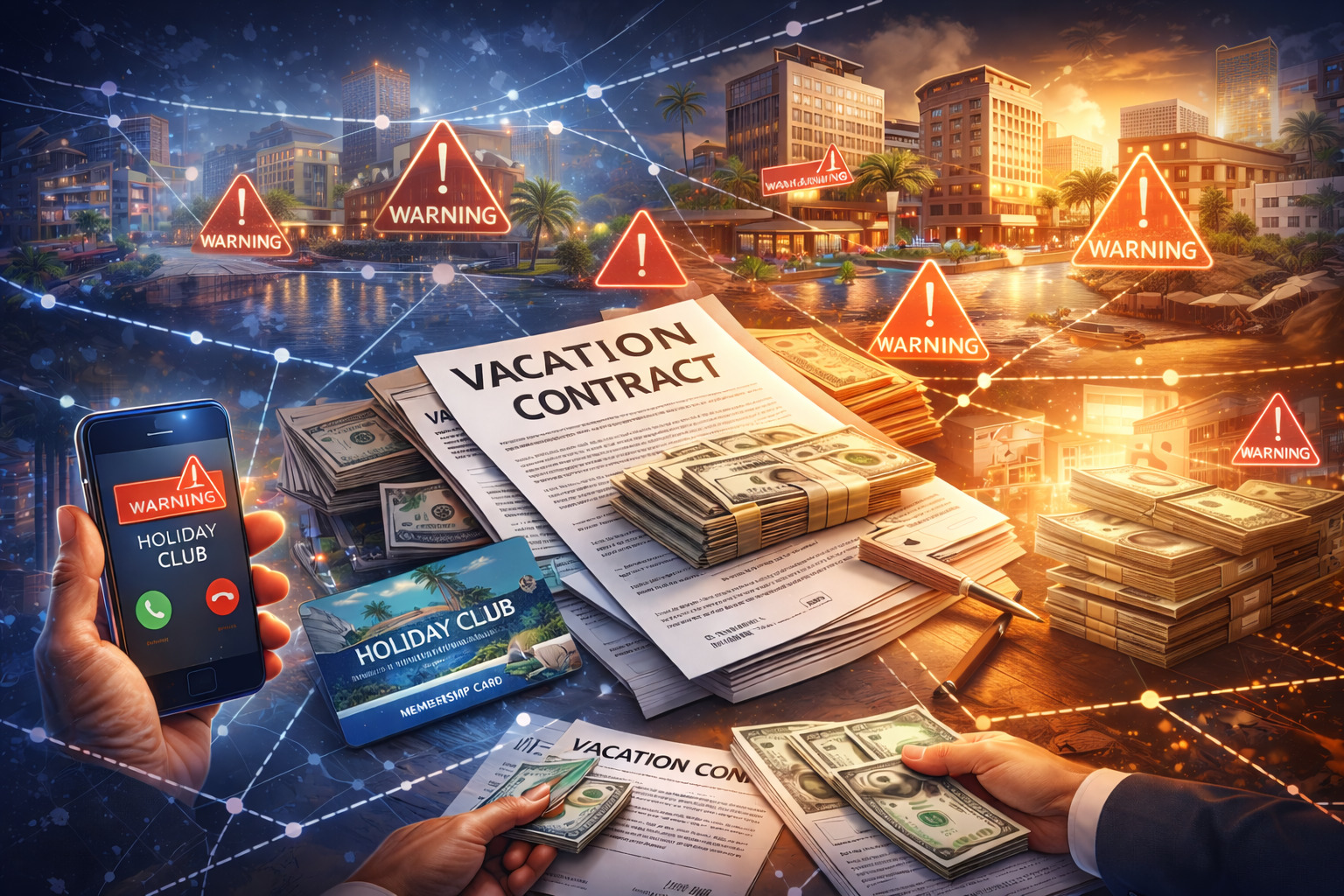
Behind invitations to receive free vouchers or attend presentations about "premium vacation ownership" lies a well-organized fraud scheme operating under the guise of legitimate businesses.
More importantly, these are no longer isolated fraud cases. The ongoing investigations reveal a far more alarming trend: businesses are being transformed into tools for building trust, collecting customer data, and operating organized fraud schemes.
Two Major Cases, One Operating Model
According to investigators:
- In Hanoi, authorities prosecuted more than 20 criminal cases involving nearly 200 suspects. Hundreds of customers were found to have lost more than VND 181 billion through vacation ownership and vacation transfer contracts.
- In Ho Chi Minh City, authorities simultaneously inspected multiple companies operating in the vacation and tourism sector, prosecuting 11 criminal cases involving nearly 200 suspects, seizing more than 5,500 contracts, and determining financial losses exceeding VND 612 billion.
Although the cases occurred in different cities and at different times, the operating methods were almost identical.
These companies typically:
- Invite customers to receive free vouchers or promotional gifts
- Organize presentations at hotels or resorts
- Promote "vacation ownership" packages with special offers available only on the day of the presentation
- Promise investment returns, resale opportunities, or rental income
- Pressure customers into signing contracts and making immediate payments
- After collecting the money, fail to honor verbal commitments because those promises were never included in the written contracts
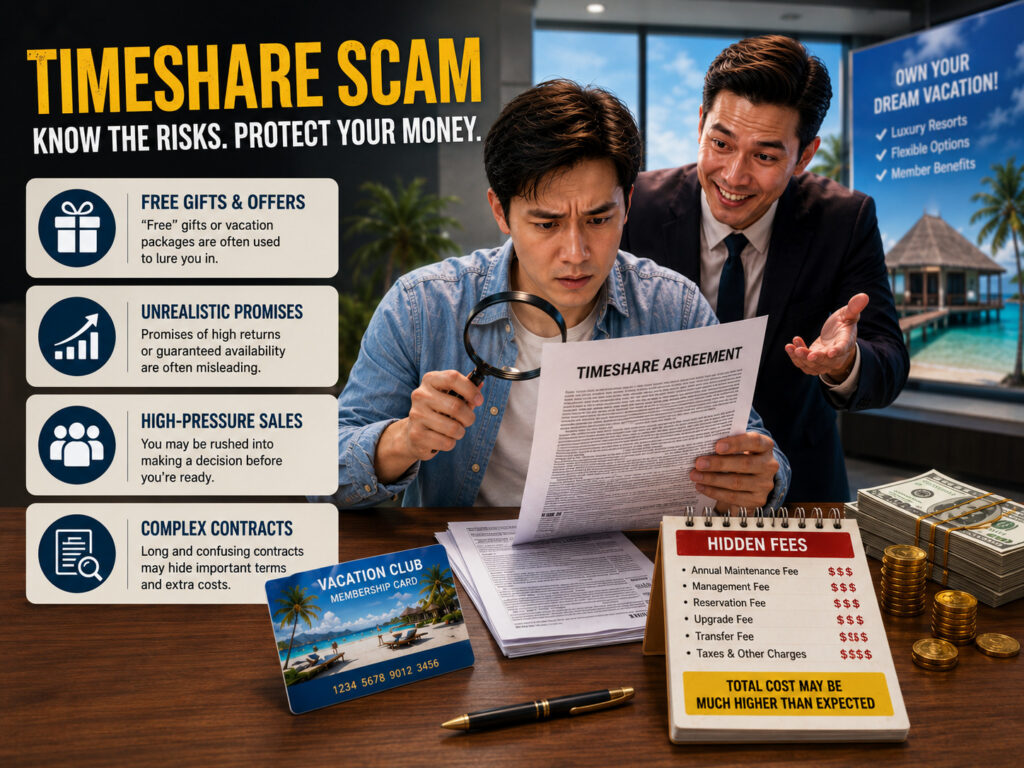
What made these schemes particularly convincing was that the companies operated with modern offices, professional websites, large sales teams, and legally registered business licenses. The appearance of being an ordinary business became the perfect cover for fraudulent activities.
This Is Not Just a Scam - It Is Corporate Fraud
When people think of Corporate Fraud, they often associate it with financial statement manipulation, embezzlement, or bribery.
However, the recent "vacation card" and "vacation contract" cases demonstrate another form of corporate fraud that is becoming increasingly common:
Businesses are established or operated primarily to create trust and ultimately misappropriate customers' assets.
Within this model, nearly every department functions like a legitimate business:
- A legally registered corporate entity
- A marketing department
- Dedicated telesales teams
- Customer service representatives
- Employee training programs
- Sales KPIs
- Standardized contract management systems
Together, they form what appears to be a fully functioning enterprise. However, the ultimate objective is not to deliver products or services, but to maximize the amount of money collected from customers.
Common Characteristics of the Fraud Model
1. Attracting Customers with Free Gifts
Free vacation vouchers.
Valuable promotional gifts.
Complimentary travel packages.
Customer appreciation campaigns.
These offers are simply designed to bring customers into high-pressure sales presentations.
2. Creating Pressure to Sign Contracts
"This promotion is available today only."
"You will lose these benefits if you don't sign now."
These techniques leave customers with little time to carefully review contracts or consult family members.
3. Making Verbal Promises
In most cases, sales representatives promise that:
- the package can easily be resold
- it will generate profits
- the company will buy it back
- ownership can be transferred at any time
However, none of these promises appear in the written contract.
4. Collecting Additional Payments After the Contract Is Signed
Once customers attempt to terminate or transfer their contracts, they are asked to pay additional fees, including:
- brokerage fees
- notarization fees
- guarantee fees
- administrative fees
- upgrade fees
- taxes
- deposits
The more customers try to recover their money, the more additional payments they are persuaded to make.
When Customer Data Becomes an Asset of the Fraud Network
One of the most striking findings from these investigations is that many victims were not defrauded only once.
After signing a vacation contract, customers had already provided their personal information, phone numbers, addresses, contract values, intentions to transfer ownership, and even information reflecting their financial capacity.
At that point, they effectively became a valuable customer database.
According to investigators, many victims later received phone calls from other companies or organizations claiming to be resale brokers, legal consultants, or specialists who could assist with transferring vacation contracts.
The scheme typically followed the same pattern:
- Informing customers that a buyer had been found for their vacation package
- Promising to help sell or transfer the contract
- Requesting advance payments for brokerage fees, documentation fees, taxes, or guarantee fees
- In some cases, requiring customers to purchase an additional vacation package before becoming eligible for the transfer
In the end, the promised transfer never took place, while customers lost even more money.
It is important to note that, as of now, investigators have not publicly confirmed whether customer data was bought or sold between different companies. Nevertheless, the fact that multiple legal entities repeatedly contacted individuals who had previously signed vacation contracts suggests that customer data had become a valuable asset within the overall fraud model.
Whether these companies operated independently or were part of the same criminal network remains under investigation.
From the perspective of Corporate Fraud, this development is particularly significant.
Businesses are no longer used solely to establish initial trust; they also serve as mechanisms for collecting, storing, and continuously exploiting customer data. After the initial transaction, every victim becomes a target for additional rounds of fraud.
In other words, customer data has become an asset that helps maximize the financial value extracted from each victim.
A Data Perspective: Can These Businesses Be Identified Earlier?
From the perspective of enterprise data, the key question is no longer how to investigate these cases after hundreds of people have already become victims, but whether businesses showing signs of elevated risk can be identified earlier.
Potential indicators include:
- frequent changes in legal representatives
- repeated changes of registered business addresses
- continuous company name changes
- multiple companies sharing the same shareholders or executives
- networks of businesses connected through common personnel or addresses
- large volumes of customer complaints
- highly similar contract structures across multiple legal entities
- unusually intensive advertising and telesales activities
- consumer reports and fraud complaints
- multiple companies contacting the same group of customers seeking contract transfers
If these data sources were integrated into an Enterprise Knowledge Graph, regulators and financial institutions could potentially identify clusters of suspicious businesses before the damage spreads further.
This is exactly the problem DataCore's Company Intelligence Service is built to solve. It links companies, legal representatives, shareholders and registered addresses into a single Enterprise Knowledge Graph, so analysts can surface hidden relationships and detect corporate fraud networks early. The same data foundation underpins our work on alternative credit scoring and enterprise security risk, and it complements identity checks such as the new SIM biometric authentication rules.
Corporate Fraud Is No Longer the Story of a Single Company
The recent cases in Hanoi and Ho Chi Minh City demonstrate a new reality: many modern fraud schemes are no longer operated through a single company.
Instead, they involve an ecosystem of multiple legal entities performing different functions:
- marketing companies
- contract-signing companies
- vacation contract transfer brokers
- legal consulting companies
- and even businesses that continue targeting customers who have already been defrauded
Each company performs one link in the fraud chain, making it difficult for victims to realize that they are continuing to interact with the same underlying network.
This is precisely why analyzing the relationships among companies, legal representatives, shareholders, customer data, and business histories is becoming an increasingly important approach in modern fraud detection systems.
Rather than evaluating companies individually, connecting enterprise data to identify an entire fraud network enables earlier detection of Corporate Fraud, reducing financial losses for consumers while contributing to a more transparent and trustworthy business environment.
Frequently Asked Questions
What are the "vacation contract" and "vacation card" scams in Vietnam?
They are timeshare-style schemes in which companies sell long-term "vacation ownership" packages using high-pressure presentations, free-gift invitations and verbal promises of resale or rental income. Authorities in Hanoi and Ho Chi Minh City have prosecuted them as organized corporate fraud rather than ordinary consumer disputes.
How much money was lost in these corporate fraud cases?
Investigators put losses at more than VND 181 billion in the Hanoi cases and more than VND 612 billion in the Ho Chi Minh City cases, for a combined total of nearly VND 800 billion across hundreds of suspects and thousands of contracts.
How do these fraud schemes operate?
The companies invite customers to claim free vouchers, run presentations at hotels or resorts, push "today only" vacation ownership offers, promise investment returns, and pressure customers into signing on the spot. Additional payments are then collected after the contract is signed.
How can data and an Enterprise Knowledge Graph help detect corporate fraud early?
By connecting companies, legal representatives, shareholders, addresses and customer complaints, a knowledge graph can reveal clusters of related entities that share personnel, contract templates or telesales patterns. This lets regulators and financial institutions flag high-risk businesses before losses spread, rather than reacting after victims come forward.
Sources
- Vietnam News - "Ha Noi police bust 'holiday contract' fraud ring that conned nearly 500 victims", June 2026. vietnamnews.vn
- VietnamNet - "Ha Noi: Khoi to 21 vu an, 187 bi can lien quan den lua dao 'hop dong ky nghi'", June 2026. vietnamnet.vn
- VnExpress - "200 nguoi o TP HCM bi bat voi cao buoc lua hon 600 ty dong qua 'hop dong ky nghi'", June 2026. vnexpress.net






Để lại một bình luận
You must be logged in to post a comment.