
TL;DR: ChatGPT market share 2026 dropped below 50% for the first time, according to Ramp data cited by TechCrunch. The same week, SpaceX acquired AI coding assistant Cursor for 60 billion USD in stock, the largest AI tools deal on record, days after SpaceX's own IPO. These two data points together mark an inflection point: the AI market is fragmenting from a single dominant player to a genuinely competitive multi-vendor landscape, with major implications for how enterprises in Vietnam evaluate and procure AI tools.
What Does ChatGPT Market Share 2026 Falling Below 50% Actually Mean?
The Ramp data tracks enterprise AI spending across thousands of businesses that use the Ramp corporate card and expense management platform. When Ramp reports that ChatGPT market share has fallen below 50%, it is measuring the share of enterprise AI tool spending flowing to OpenAI's ChatGPT (and ChatGPT Enterprise) versus all competing AI tools combined. This is spending share, not user count, a meaningful distinction because enterprise spending often tracks value delivered more closely than raw signups or session counts.
The finding is significant because OpenAI has dominated the enterprise AI spending conversation since ChatGPT launched in late 2022. Achieving and holding above 50% market share in any enterprise software category is a position of extraordinary strength. Losing that majority position, even by a fraction, signals that enterprise buyers are diversifying their AI portfolios rather than consolidating on a single preferred vendor.
The competing tools gaining share include Anthropic's Claude (even as it faces the Fable 5 controversy), Google Gemini (especially through Workspace integration), Microsoft Copilot (embedded across the Microsoft 365 suite), Perplexity AI (gaining on research and knowledge-retrieval use cases), and Meta's open-weight Llama models (used by enterprises building internal tools rather than buying API access). The fragmentation is broad, not concentrated in a single challenger.

Why Is the SpaceX Acquisition of Cursor Relevant to AI Market Share?
The 60 billion USD acquisition of Cursor by SpaceX, announced days after SpaceX's own IPO, is the largest acquisition of an AI tools company on record. Cursor is an AI-powered code editor that has become the dominant tool in the AI coding assistant market, with a user base that skews heavily toward professional software engineers and enterprise development teams.
The strategic logic for SpaceX acquiring Cursor is debated, but the most convincing interpretation is talent and capability acquisition. SpaceX employs thousands of software engineers, and having proprietary access to one of the most productive AI coding environments in the market creates a significant competitive moat. The acquisition also signals SpaceX's ambition to be a technology platform company, not just a launch vehicle and satellite operator.
The 60 billion USD valuation places Cursor among the most valuable AI startups ever acquired. For context, this is larger than many publicly traded technology companies and reflects the premium that acquirers are willing to pay for tools that measurably increase software engineer productivity. The deal validates the "enterprise AI tooling" category as a standalone market worth multi-billion-dollar investments.
The Cursor deal, combined with the ChatGPT market share data, paints a picture of an AI market where value is increasingly captured at the application and tooling layer, not exclusively at the foundation model layer. OpenAI's strength comes from the model layer. Cursor's value (and acquisition price) comes from the workflow integration layer. This distinction matters for how enterprises should think about AI procurement strategy.
What Is Driving the Decline in ChatGPT's Market Share?
Several structural factors are contributing to the decline in ChatGPT's dominant market share position.
Workflow integration by rivals. Microsoft Copilot is embedded directly into Word, Excel, Outlook, Teams, and the rest of the Microsoft 365 suite. For enterprises already standardized on Microsoft infrastructure, the path of least resistance for AI adoption runs through Copilot, not a separate ChatGPT subscription. Google Gemini occupies the same embedded position in Google Workspace. These workflow integrations are sticky in a way that standalone AI chat interfaces are not.
Open-source models becoming enterprise-viable. Meta's Llama 4 and Mistral's large models are now capable enough for a wide range of enterprise use cases, and they can be deployed on-premises or in a private cloud without any dependency on an external API. For enterprises with data sovereignty requirements (financial institutions, healthcare providers, government agencies), self-hosted open models are often the only compliant option. This segment of demand was never going to show up in ChatGPT's usage share.
Specialized vertical AI tools. The enterprise market is increasingly served by AI tools built specifically for a vertical, such as AI for legal document review, AI for medical coding, AI for financial analysis, and AI for software testing. These tools use foundation models under the hood (often including OpenAI models via the API), but the end-user interaction is with the vertical product, not with ChatGPT directly. This category of "invisible" foundation model usage does not show up as ChatGPT market share in spending data even when OpenAI's API powers the application.

What Does the ChatGPT Market Share Shift Mean for Vietnamese Enterprises?
For Vietnamese technology teams and business decision-makers evaluating AI tool procurement, the ChatGPT market share data has practical implications beyond the competitive curiosity of watching tech giants compete.
The "just use ChatGPT" default is weakening. A year ago, recommending ChatGPT for general enterprise AI tasks was a safe, defensible choice because it was clearly the most capable and most widely supported tool. That recommendation still has merit, but it is less automatic. A 2026 enterprise AI evaluation should now systematically compare ChatGPT, Gemini, and Claude at minimum, and should include a self-hosted open-source option if data residency requirements are relevant.
The Anthropic ban adds an uncertainty variable. The Fable 5 ban illustrates that relying on any single US-hosted AI vendor carries regulatory jurisdiction risk. A diversified AI vendor strategy is now both a business continuity argument and a competitive capability argument. Vietnamese financial institutions, in particular, should consider what their AI tools landscape looks like if any one vendor's models become unavailable, and whether they have tested fallback workflows.
Pricing pressure will benefit buyers. When a market transitions from one dominant vendor to genuine competition, procurement leverage shifts toward buyers. AI tool pricing has already been falling across the market as models improve and compute costs decline. In a more competitive market, enterprises that are willing to run competitive evaluations (rather than defaulting to the incumbent) should be able to negotiate better terms, including lower per-token costs and more favorable enterprise contract structures.
The application layer matters more than the model layer for most use cases. The Cursor acquisition crystallizes a point that practitioners have been making for a while: for most enterprise use cases, the quality of the workflow integration matters more than which foundation model is running underneath. A well-integrated AI tool that fits your existing workflow and data systems will deliver more value than a theoretically superior model that requires significant custom integration work. Vietnamese enterprises evaluating AI tools should weight workflow fit and local data compatibility as highly as raw benchmark scores.
How Is OpenAI Responding to the Loss of Majority Market Share?
OpenAI has not explicitly commented on the Ramp market share data, but its product strategy in 2026 reflects awareness of the competitive pressure. The company has accelerated its push into enterprise workflow integration, partnering with Apple (through the iOS integration of ChatGPT into Siri) and expanding OpenAI for Enterprise with features like Projects, custom instructions, and team workspaces designed to compete more directly with Microsoft Copilot's embedded workflow model.
OpenAI also continues to lead on model capability at the frontier. GPT-5, released earlier in 2026, maintained OpenAI's position at the top of most reasoning and coding benchmarks. The company's strategy appears to be: lead on model capability to maintain brand authority, while simultaneously building workflow integrations that create stickiness beyond raw model performance comparisons.
The market share data should be read in context: below 50% is still the single largest share in a fragmented market. OpenAI remains by far the largest AI infrastructure company by revenue and compute investment. The story is not that OpenAI is losing, but that the market is growing fast enough that other vendors are capturing significant portions of new spending without necessarily taking existing OpenAI customers away.
Industry analysts tracking enterprise AI spending note that the total size of the AI tools market grew by more than 80% between 2024 and 2026. A falling percentage share in a rapidly growing market can represent absolute revenue growth even as competitive pressure mounts. OpenAI's revenue is estimated to have more than doubled in this period despite the share erosion, which context explains why the company continues to invest aggressively in both model research and enterprise sales despite the headline market share narrative.
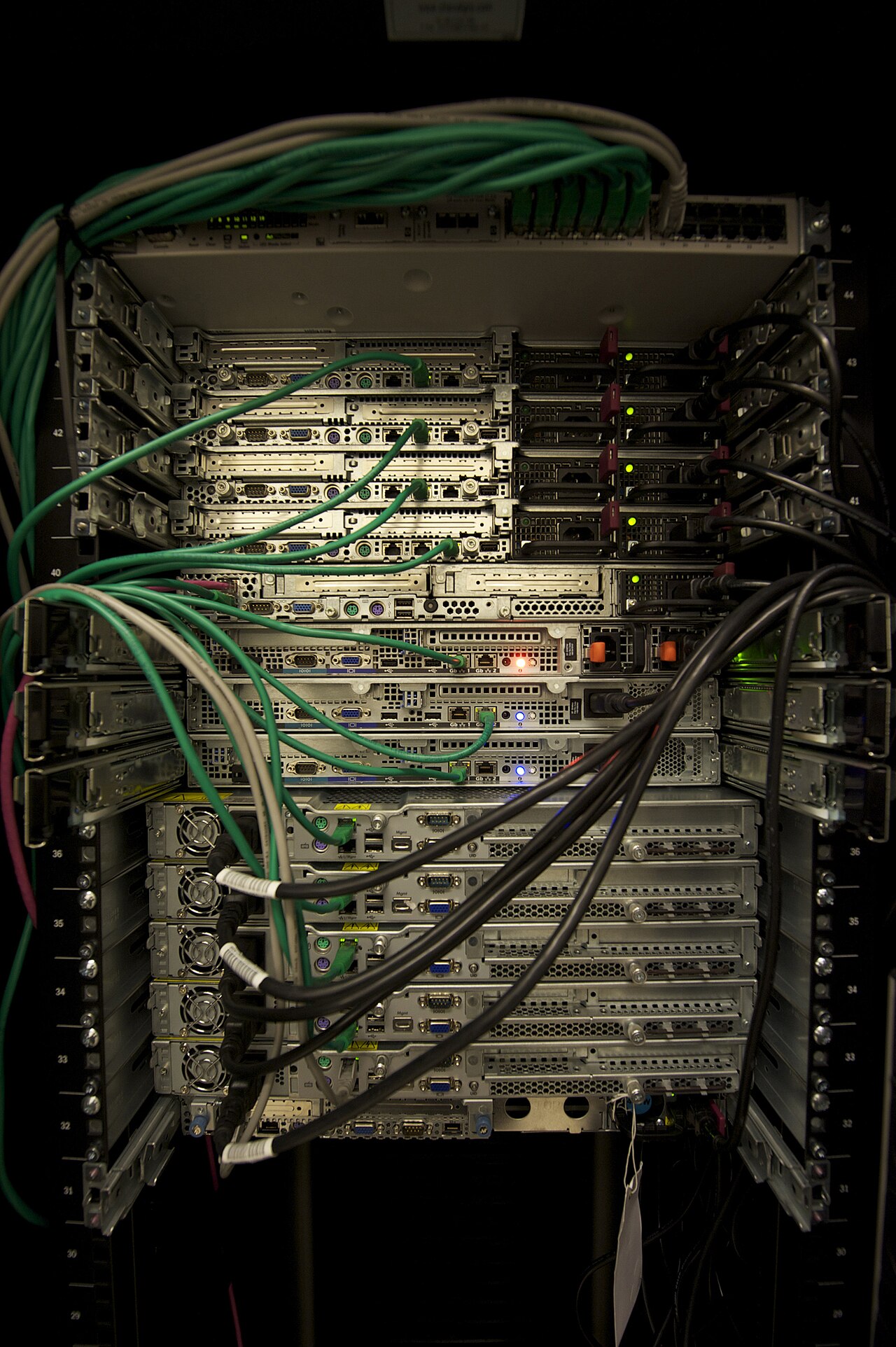
The Semiconductor Squeeze: How AI Demand Is Disrupting Global Supply Chains
The same week that ChatGPT market share broke below 50%, semiconductor industry executives were warning that the AI compute buildout is squeezing the retail solid-state drive (SSD) supply chain to a near-breaking point. Hyperscalers including Google, Microsoft, Amazon, and Meta are absorbing semiconductor production capacity at a scale that is crowding out production for consumer and enterprise storage devices.
The dynamic is a consequence of how AI data center economics work. Training a large frontier model requires clusters of tens of thousands of accelerator chips running continuously for months, consuming not just the compute chips but enormous quantities of high-bandwidth memory, storage controllers, and the SSDs used in the AI storage infrastructure. As the number of frontier model training runs increases and inference deployment scales, the total semiconductor demand from AI data centers is growing faster than global semiconductor production capacity.
For enterprises in Vietnam looking to expand their own AI compute capacity, the supply chain tightness has two practical effects. First, lead times for AI-specific hardware (NVIDIA GPU clusters, high-bandwidth memory modules) remain extended, often 6 to 12 months for delivery after order.
DataCore's HPC-OOD service manages this procurement challenge for enterprise clients who need AI compute without the capital investment and supply chain management overhead of building their own clusters. Second, the pricing premium for AI compute over commodity compute has widened, making the build-versus-buy calculus favor cloud or managed service options for most Vietnam enterprises except those with very large sustained compute requirements.
The US government has moved to address the AI infrastructure bottleneck on the power side, mandating that AI data centers receive priority connections to the electricity grid. This is the first time the US federal government has designated AI compute infrastructure as priority critical infrastructure for grid access, reflecting the administration's view that AI capability leadership requires matching infrastructure investment. The grid priority mandate will accelerate new AI data center construction in the United States, which may partially relieve the supply chain pressure over a 2 to 3 year horizon as new capacity comes online.
What the AI Market Consolidation Means for DataCore's Customers
DataCore's customers span financial institutions, investment managers, and enterprise technology teams in Vietnam. All of these segments are grappling with AI procurement decisions in a market that is more competitive and more complex than it was 12 months ago. Several themes emerge from the current competitive AI landscape that are directly relevant to how DataCore's data services integrate with AI tooling.
Financial institutions using AI for credit analysis, fraud detection, and market data processing increasingly need to combine high-quality structured data with AI inference capability. The quality of the structured data layer is often more determinative of AI application performance than the choice of AI model. An AI credit scoring model that runs on GPT-5 but uses low-quality company financial data will underperform a model using an older, less capable AI but running on clean, complete, timely financial data. DataCore's Company Intelligence Service provides the Vietnamese company data layer that sits upstream of whatever AI model a customer chooses to deploy.
Investment managers building quantitative strategies on Vietnamese equities benefit from the same data quality principle. As AI-assisted fundamental analysis becomes more common, the competitive advantage increasingly lies in having access to data that competitors do not have, rather than using a superior model on the same publicly available data. DataCore's data products cover alternative data signals and disclosed company data on a timeline and granularity that creates an edge for customers willing to build AI workflows around them.
For the broader analysis of how AI market developments affect Vietnamese businesses, follow DataCore's coverage of AI model access risk in 2026.
Frequently Asked Questions About ChatGPT Market Share in 2026
What is ChatGPT's current market share?
According to Ramp data cited by TechCrunch in June 2026, ChatGPT's share of enterprise AI tool spending has fallen below 50% for the first time. The exact figure was not publicly disclosed, but the threshold crossing is significant given that ChatGPT had maintained majority market share in enterprise AI spending since the category emerged in 2023.
Why did SpaceX buy Cursor for 60 billion USD?
The strategic rationale most analysts cite is a combination of talent acquisition, proprietary tooling for SpaceX's large engineering workforce, and a bet on the AI-assisted software development category as a major value driver. SpaceX's IPO earlier in the same week gave it publicly tradeable stock to use as acquisition currency. The 60 billion USD valuation reflects both Cursor's strong market position in AI coding tools and the strategic premium SpaceX was willing to pay for immediate capability rather than building an equivalent tool from scratch.
Which AI tool is growing the fastest in enterprise market share?
Based on the Ramp data and other enterprise surveys published in 2026, Microsoft Copilot and Google Gemini are the fastest-growing enterprise AI tools by spending share, primarily because they are embedded in existing Microsoft 365 and Google Workspace deployments. Among standalone AI tools, Anthropic's Claude has been gaining share in legal, research, and document-heavy workflows despite the Fable 5 controversy. Open-source deployments (Llama 4, Mistral) are growing fastest in regulated industries where data residency requirements make external API usage difficult.
Should Vietnamese companies use ChatGPT or a competitor?
There is no single correct answer. The right AI tool depends on use case, existing infrastructure, data handling requirements, and total cost of ownership. Vietnamese enterprises in regulated industries (banking, insurance, healthcare) should prioritize tools that can operate on-premises or in a compliant private cloud. For general productivity and content tasks, a systematic evaluation of ChatGPT, Gemini, and Claude across your specific task set will reveal meaningful capability and cost differences. The key message from the 2026 market data is that defaulting to ChatGPT without evaluation is now leaving potential value on the table.
Sources
- TechCrunch: "ChatGPT's market share dips below 50 for the first time." June 2026. techcrunch.com
- TechCrunch: "SpaceX acquired AI coding startup Cursor for 60B in stock right after its IPO." June 2026. techcrunch.com
- Ramp: Enterprise AI Spend Index. June 2026. ramp.com






Để lại một bình luận
You must be logged in to post a comment.