

TL;DR: Vietnam’s data market is entering a new phase as data increasingly becomes an asset that can be connected, shared and used to create value. For businesses, the opportunity goes beyond owning or trading data: it lies in standardizing, enriching, integrating and turning data into reliable inputs for analytics, AI and business decision-making.
Data is shifting from a “stored resource” to an asset that can be put to work
For years, enterprise data has largely been treated as information for internal operations: customer data sits in CRM systems, transactions in sales platforms, financial data in accounting software, while production and operational data is often scattered across multiple systems. As a result, the value of data has often remained confined to the system that generated it.
That picture is changing. Vietnam is gradually building the framework for a market in which data can be provided, shared and used through clearer mechanisms. Decree No. 314/2026/ND-CP on data exchange operations, issued on August 8, 2026 and effective from September 25, 2026, establishes requirements for data products and services, quality, provenance, data protection and activities on data exchanges. Together with the National Data Strategy and growing demand for AI-ready data, this signals a shift toward treating data as an economic resource that can circulate and create value.
But the opportunity is not simply about “selling data.” For most businesses, greater value may come from making better use of existing data, filling information gaps with external sources, developing data-powered products, or preparing high-quality data for AI applications.
The question is therefore no longer just how much data a company has, but what value that data can create.
From internal data to a data market
In the traditional model, the data lifecycle usually stays within one organization: a company collects data, stores it in databases, CRM systems or data warehouses, and uses it for reporting and internal operations.
As the data market develops, the value chain becomes broader:
Data Owner → Data Processing & Services → Data Products → Data Exchange/Platform → Data User
This creates three important changes.
First, data can be standardized into data products. A data product does not have to be a downloadable file. It can be delivered through an API, dashboard, analytical report, scoring model, query service or a continuously updated data feed.
Second, data can be provided and used through controlled mechanisms. Provenance, access rights, permitted uses, quality, change history and compliance become part of the product itself.
Third, a new service layer emerges between data owners and data users. Raw data is rarely ready for a business use case when it is first generated. It often needs to be collected, verified, cleaned, standardized, labeled, enriched, integrated and governed before it can be used in analytics or AI.
This service layer is an important part of the data market alongside direct data transactions.
Not all data can create value immediately
A database containing millions of records is not automatically a valuable data asset. Volume is only one part of the equation.
To become genuinely usable, data often needs to move through a transformation chain:
Raw Data → Clean → Structured → Enriched → Governed → Accessible → Valuable

Data quality
Data needs to be accurate, complete, consistent and sufficiently up to date for its intended use. A customer database may contain millions of records, but duplicate entries, inactive phone numbers and missing fields can quickly reduce its analytical value.
Data structure
Data from different sources often uses different formats, schemas and conventions. Standardization allows data to be connected and processed automatically rather than relying on manual work.
Data provenance
Businesses need to know where data came from, when it was created, what processing it has undergone and who is responsible for the source. Data provenance becomes particularly important when data is shared across organizations or used to build AI models.
Rights and compliance
Having data does not mean having the right to use it for every purpose. Rights to collect, process, share and exploit data must be clearly established, especially for personal data or other protected categories.
Metadata and documentation
Schemas, data dictionaries, field descriptions, collection methodology and update frequency help users understand data correctly before making decisions based on it.
Accessibility
Data is useful only when the people or systems that need it can access it in the right way: through APIs, files, database queries, dashboards or controlled analytical environments.
Value therefore does not come simply from owning data. It comes from turning data into a reliable resource that can be connected and used.
Five opportunities for businesses in the data market
1. Get more value from data the business already owns
The closest opportunity is often already inside the company’s existing systems. CRM data reveals customer interaction history. Transaction data reflects purchasing behavior. Operational data shows process performance. Customer-service data contains signals about needs, satisfaction and churn risk.
When these sources are connected, cleaned and analyzed together, businesses can build a fuller view of customers and operations without necessarily buying more external data.
More importantly, a company does not need to commercialize its data to create value from it. The first returns may come from lower costs, better forecasting, stronger lead identification, improved resource allocation or automating decisions that were previously made manually.
2. Enrich internal data with external sources
Internal data usually reflects what happened within interactions between a customer and the business. It does not always provide enough context to explain why something happened or what may happen next.
This is where data enrichment creates value.
Customer Data + Business Data + Geographic Data + Market Data + Economic Data → Customer/Business 360°
A business might combine customer records with company information, geography, industry data, market movements or economic indicators to support segmentation, opportunity assessment, risk management or market intelligence.
The goal is not to add as many fields as possible. External data is valuable only when it improves a specific decision.
3. Turn data into a Data Product
A business with specialized data can create new value by turning it into a reusable product.
Dataset → API → Dashboard → Analytics → Insight Service
At the simplest level, the product may be a standardized dataset updated on a regular schedule. At a higher level, users may never need to interact with raw data at all: they can call an API, access a dashboard or receive analytical outputs directly.
This changes how we think about a “data product.” Customers do not always need the data itself. They may need an answer, a metric, an alert or a decision supported by data.
4. Prepare data for AI
The growth of AI is increasing demand for data while making one reality clearer: a strong model cannot fully compensate for poor-quality inputs.
To use data for model training, RAG, machine learning or automated analytics, businesses often need a pipeline such as:
Raw Data → Data Preparation → AI-ready Data → Training/RAG/Analytics → Business Application
Data preparation can include collection, error removal, format standardization, missing-data handling, labeling, anonymization, enrichment and quality control.
As AI becomes more directly involved in decision-making, the quality and traceability of input data become even more important. “AI-ready” therefore means more than machine-readable; the data must also be reliable and appropriate for the use case.
5. Build new data-powered products and services
When multiple data sources can be connected, businesses can create entirely new service layers.
In finance, data can support credit intelligence, risk scoring and fraud detection. In marketing and sales, it can enable customer intelligence, lead scoring, personalization and next-best-action. In real estate, logistics and retail, geospatial data can power location intelligence. For B2B companies, business and market data can underpin market intelligence and opportunity assessment.
The value is no longer in an isolated database, but in the ability to combine multiple sources into a product that solves a specific problem.
Businesses do not need to become “data companies”
Not every company needs to build a large data department or develop the entire infrastructure stack from scratch.
Businesses with substantial data can start by inventorying, standardizing and governing their assets, then identifying use cases with clear value potential.
Businesses that have data but lack context can add external sources and use data enrichment to deepen their analysis.
Businesses that lack data for a specific problem can use data sourcing and collection services or work with specialized data and data-service providers.
This creates a clear role for data service providers. Instead of every company building its own data pipeline, hiring a full data engineering team, sourcing data, setting up validation processes and investing in processing infrastructure, part or all of that chain can be delivered as a service.
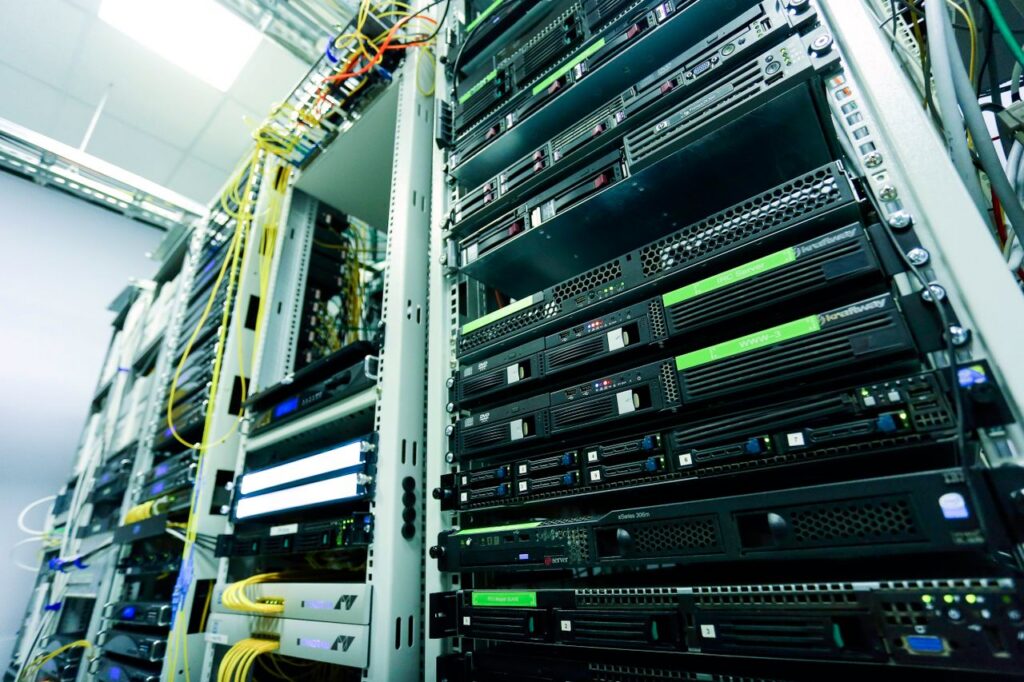
A service ecosystem will form around the flow of data
As data circulates more widely, the market will need more than data owners and data buyers. A broader ecosystem will develop around the process of turning data into value:
Data Sources
↓
Collection & Sourcing
↓
Validation & Cleaning
↓
Labeling & Enrichment
↓
Integration & Governance
↓
Analytics / AI / HPC
↓
Business Decisions
Different roles can exist across this chain: data providers, data processors, data exchanges, data infrastructure providers, analytics/AI providers and data users.
Each layer addresses a different bottleneck. Data providers solve the sourcing problem. Data processing improves quality. Infrastructure enables storage and processing at the required scale. Analytics and AI turn data into insights or actions. Exchange platforms connect supply and demand.
As data begins to flow, economic value therefore lies not only in the data being transacted. A significant share of value can be created by the services that make data trustworthy, connected and usable.
What should businesses prepare now?
Rather than starting with a large technology project, businesses can begin with four simple questions.
1. What data do we already own?
A data inventory helps identify where data is stored, who manages it, how it is updated and what it is currently used for.
2. Is the data good enough, and do we have the rights to use it?
Assess quality, provenance, access rights and compliance requirements before using data for a new purpose or sharing it with another party.
3. What additional data sources could increase its value?
Identify the questions internal data cannot answer, then look for the right external data. This is more effective than buying large volumes of data first and searching for a use case later.
4. Which use cases can create business value?
An effective data strategy should not begin with “How much data do we have?” It should begin with a business decision or problem: what needs to be forecast, where customer understanding is insufficient, what risk needs to be reduced, or which process could be automated.
Only then should the organization determine what data, processing methods and infrastructure are required.
DataCore: From data to usable value
In an emerging data market, businesses will need more than a dataset. They need data that fits the problem, meets quality requirements, integrates with existing systems and is ready for analytics or AI.
DataCore is building services that help businesses develop and use this value chain: from data sourcing and collection, verification, cleaning, standardization and enrichment to integration, analytics, AI data preparation and computing infrastructure for large-scale data workloads.
Data sourcing & collection → Data cleaning & validation → Data enrichment → Data integration → Data analytics → AI-ready data → HPC & data infrastructure
The ultimate goal is not to own more data, but to put the right data into the right decisions.
Data Leads Future.
Turn data into a usable competitive advantage with DataCore.
References
1. Government of Vietnam – Decree No. 314/2026/ND-CP regulating data exchange operations.
2. Vietnam National Data Strategy for 2026–2030, vision to 2045.






Để lại một bình luận
You must be logged in to post a comment.