
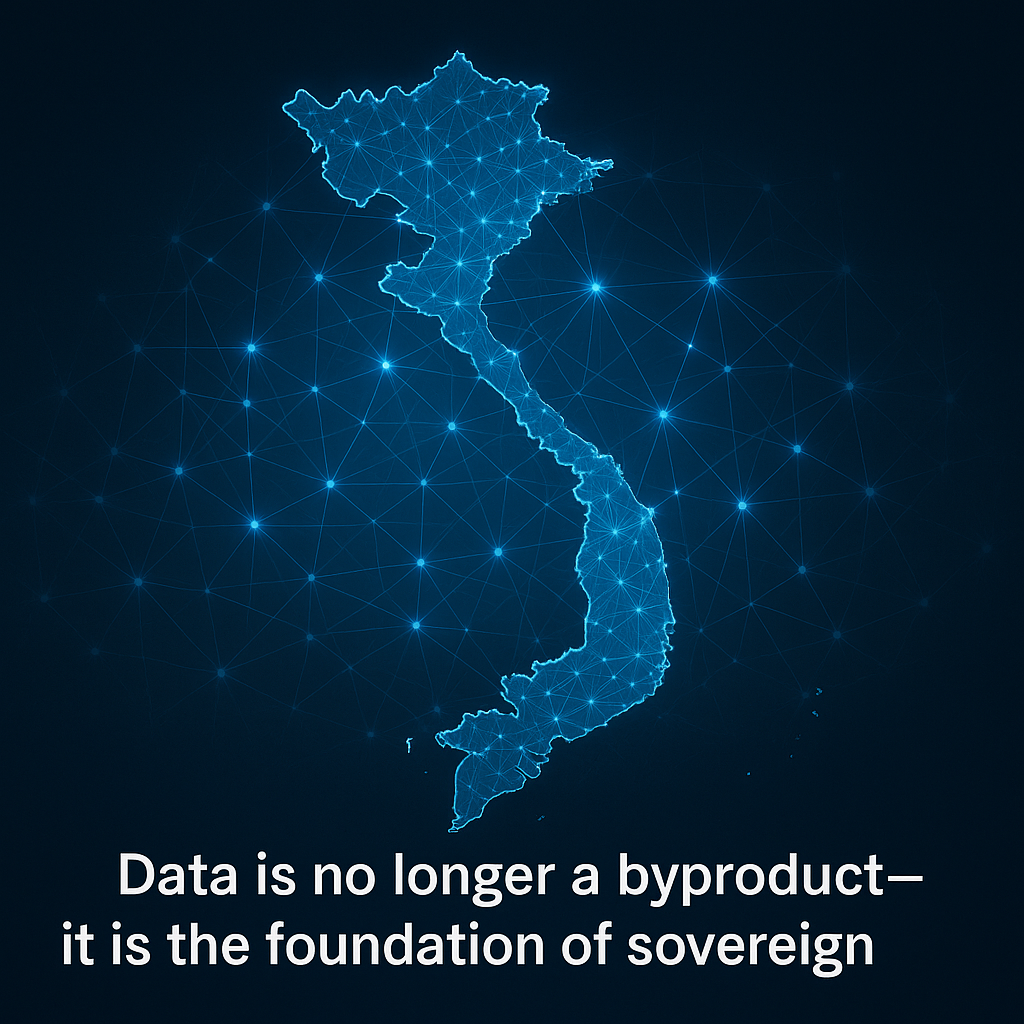
Vietnamese administrative boundary data has just gone through its biggest reset in two decades. Over the past 12 months, the country's administrative unit system saw the largest reshuffle in 20 years. The 11,162 new communes and wards were consolidated from a number roughly double that, and with it comes a fact most teams haven't noticed: millions of addresses sitting in customer databases, contracts, and KYC systems are now out of sync. When addresses drift, credit applications get rejected by mistake, deliveries arrive at the wrong door, and territory plans break.
This article walks through the 5 most common Vietnamese administrative boundary data mistakes we have observed across many B2B teams in Vietnam, and how each was fixed.

Mistake 1: Storing "frozen" addresses in your database
Most systems store customer addresses as free-form text strings: "12 ABC Street, Ward X, District Y, Hanoi". When Ward X is merged into Ward Z, the old string just sits there, nobody updates it, nobody knows it's wrong. Without a Vietnamese administrative boundary data layer underneath, the error compounds quietly.
The consequence: three months later, when the compliance team runs a report against the new administrative boundaries, a meaningful share of customer records show "geography mismatch". Ops has to clean it up by hand, which takes weeks.
The fix: instead of storing the text string alone, store a commune_id and effective_date (the date the administrative code became valid). When boundaries change, a nightly ETL job maps the old commune_id to the new one without touching the original address string. This keeps your Vietnamese administrative boundary data layer durable across mergers.
Mistake 2: Relying on intermittent free Vietnamese administrative boundary data
Many Vietnamese data teams are still using a community shared Excel file of communes and wards, or scraping Wikipedia themselves. Two problems: slow updates or none at all (the latest Excel you downloaded may already be 18 months old), and no history (you cannot ask "on 12 June 2014, which commune did this address belong to?").
The fix: move to a provider that commits to a refresh frequency SLA and has at least 10 years of history. DataCore Cadastral Services covers 20 years of Vietnamese administrative boundary data (2005 to today), updated daily from official documents.
Mistake 3: No ability to query Vietnamese administrative boundary data by point in time
This is the one credit, insurance, and legal teams hit most often. Typical scenario: a customer opens an account in 2017 with an address in Ward A, District B. In 2025, Ward A is merged into District C. When an auditor reconciles the old contract against the current database, the system reports "address does not exist." The compliance team spends two weeks proving that the address was, in fact, valid at the time the contract was signed. Every internal audit stalls here when there is no point in time Vietnamese administrative boundary data layer.
The problem is not bad data. The problem is your system cannot answer the question: "On date X, which administrative unit did this address belong to?"
The fix: pick an API that supports as_of_date queries. Cadastral Services returns a snapshot for any date in the last 20 years, extremely useful for audits, due diligence, and contract disputes.
Mistake 4: Treating addresses as plain text instead of geographic objects
A surprising number of B2B teams in Vietnam still treat customer addresses as plain strings, never linking them to canonical IDs, never carrying GeoJSON, never plotting them on a map. The result: any analysis that needs spatial reasoning (delivery routing, sales territory design, branch network planning) starts from scratch every time.
The fix: treat each address as a geographic object with three layers attached, the canonical commune_id from your Vietnamese administrative boundary data provider, the polygon boundary as GeoJSON, and the centroid lat and lng. With these three pieces, downstream systems get a single source of geographic truth.
Mistake 5: Treating Vietnamese administrative boundary data as a cost, not infrastructure
This is the most invisible mistake, and the most expensive. When leadership cuts the data purchase budget because the ROI is not clear, the data team is forced into workarounds: monthly hand scraping into Excel, buying scattered records from brokers with no commitments, or building scrapers nobody owns.
Six months later, the hidden costs (engineer time, support firefighting, production errors) can run several times higher than just paying a professional Vietnamese administrative boundary data provider from day one.
The fix: pull foundation data (administrative boundaries, customer identity, geographic IDs) out of the marketing costs bucket and put it into infrastructure, alongside cloud, monitoring, and security. This is a predictable spend that every downstream team relies on.
The bottom line: Vietnamese administrative boundary data is infrastructure
These five mistakes are not technical problems, they are habit problems. Vietnam's B2B data plumbing has gotten by on good enough for the last 10 years, but the 2025 commune merger reform is pushing every team to a point where they have to upgrade.
In a follow-up post, we will share a deeper write-up on practical evaluation criteria teams use when choosing a Vietnamese administrative boundary data provider.
Try DataCore Cadastral Services for free
Try DataCore Cadastral Services, 20 years of Vietnamese administrative boundary data, 10 free queries per day. Read more case studies on 5 Vietnamese company lookup mistakes. Background context on Vietnam's commune merger is available from Wikipedia.
Questions? Reply to this post or reach the DataCore team at contact@datacore.vn.






Để lại một bình luận
You must be logged in to post a comment.