
The VN-Index closed at 1,804.24 points on Thursday, July 17, 2026, after one of the most dramatic intraday reversals of the year on the Ho Chi Minh Stock Exchange (HOSE). The benchmark broke below the 1,800 mark in the morning, then buyers stepped in at the low and lifted it 22.12 points (1.24%) into the close. With Vietnam's H1 2026 GDP growth confirmed at 8.18% by the General Statistics Office (GSO), brokerage desks across Ho Chi Minh City are openly discussing a July break above 1,900 points.
This article unpacks the session, the macro engine behind it, and what a VN-Index run at 1,900 would mean for people who work with Vietnamese financial data for a living: analysts, portfolio managers, risk teams, and the data engineers who feed them.
TL;DR: the five numbers that matter this week.
- The VN-Index swung from 1,790 to 1,804 in a single session on July 17, 2026, closing at 1,804.24, up 22.12 points (1.24%), as buyers absorbed the morning sell-off.
- Vietnam's H1 2026 GDP grew 8.18%, with Q2 2026 alone at 8.39%, the highest first-half reading in many years, according to the General Statistics Office.
- Outstanding credit reached nearly VND 20 quadrillion by late June 2026, up 7.41% from year-end 2025, while the State Bank of Vietnam held its policy rate at 4.5%.
- Private corporate bond placements hit VND 214 trillion (approximately USD 8.14 billion) in Q2 2026, roughly nine times the prior quarter, under the new Decree 200/2026 framework.
- Analyst consensus points to a VN-Index test of 1,900 points in July if Q2 earnings confirm the macro story. Index forecasts are analyst views, not investment advice.
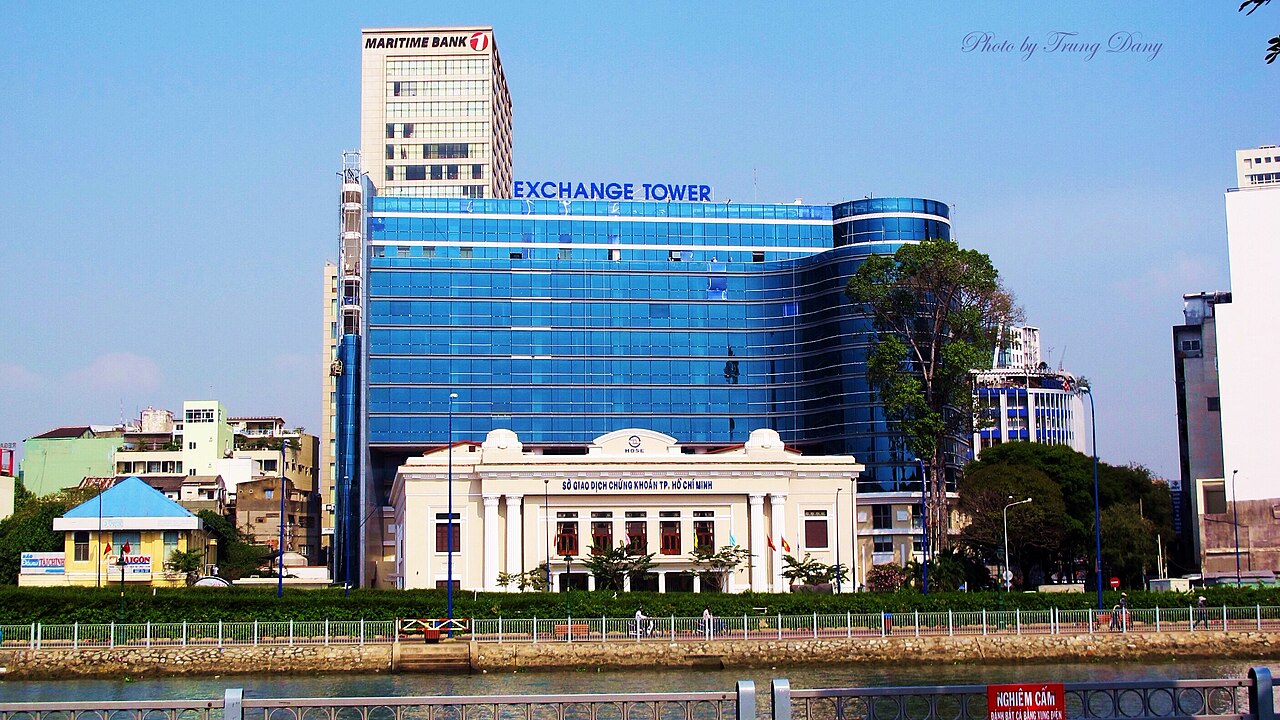
Table of Contents
- Why did the VN-Index fall and recover in the same session?
- What does 8.18% GDP growth mean for financial data users?
- How is bank credit expansion shaping corporate fundamentals?
- What does the corporate bond surge signal for Q3?
- Which sectors are leading capital flows in July 2026?
- What could push the VN-Index past 1,900 points?
- What could hold the market back below 1,900?
- How do foreign flows move the VN-Index?
- How do investors use market data during a rally?
- FAQ: quick answers for busy readers
- Key takeaways
- Sources
Why did the VN-Index fall and recover in the same session?
On Thursday, July 17, HOSE opened under broad selling pressure. Profit-taking after a strong multi-week run pushed the VN-Index down more than 24 points below the 1,800-point mark, a level that has served as the market's key psychological threshold for much of 2026. Breadth was firmly negative through the morning, with banks, real estate, and securities names all under pressure at the same time.
Within the final hours of trading, buyers returned in force. The VN-Index closed at 1,804.24, up 22.12 points, or 1.24%, back above the level it had broken hours earlier. Reversals of this shape, a hard flush followed by an immediate reclaim, are typically read by technicians as evidence that supply has been absorbed rather than the start of a deeper correction.

Liquidity told the real story. Total HOSE trading value reached VND 19.3 trillion, approximately USD 735 million, in the single session. The blue-chip VN30 basket alone accounted for VND 11.2 trillion, about 58% of exchange turnover.
What does the liquidity pattern tell data-driven investors?
Turnover that concentrates in large caps during a sell-off and recovery usually signals institutional accumulation rather than retail panic. Retail-driven sessions tend to spread volume across speculative small caps; institution-driven sessions cluster in index heavyweights that big funds can enter and exit at size. Tracking that split, day by day, is one of the simplest ways to judge whether a shakeout is healthy.
For quantitative teams, the session is also a reminder that intraday data matters. The end-of-day print showed a routine 1.24% up day for the VN-Index. The tick-level record showed a full stress test of the 1,800 level, and the market passed it with volume to spare.
What does 8.18% GDP growth mean for financial data users?
Vietnam's General Statistics Office confirmed H1 2026 GDP growth at 8.18%, with Q2 2026 alone at 8.39%, the highest first-half reading in many years. Growth at that pace, at Vietnam's current economic scale, is rare among emerging markets in 2026, and equity strategists took notice the same day the release crossed the wires.
The investment inflow data reinforces the headline. Disbursed foreign direct investment (FDI) reached USD 13 billion in H1 2026, the highest first-half figure in five years. Registered FDI capital jumped 61% year-on-year to USD 34.7 billion, with technology and high-value manufacturing leading new commitments. Capital that is registered today becomes factories, jobs, and export revenue over the following two to three years, which is why strategists treat the registration series as a leading indicator.

From a macro print to earnings estimates: the transmission chain
Why does a GDP number move a stock index? The chain runs in three steps. First, faster nominal growth lifts revenue forecasts, especially for banks, retailers, industrial park operators, and logistics firms whose top lines track domestic activity. Second, strong growth with contained inflation lets the central bank keep rates low, which reduces the discount rate applied to future earnings. Third, credible macro data attracts foreign allocations, which adds a persistent bid under the large caps that steer the VN-Index.
For financial data users, the practical implication is that granular, company-level data becomes more valuable, not less, in a hot macro environment. When everything looks good at the headline level, analysts have to separate genuine operating growth from leverage-driven expansion. DataCore's Company Intelligence Service tracks financial statements, credit ratings, and ownership structures for listed and unlisted Vietnamese companies for exactly this reason.
How is bank credit expansion shaping corporate fundamentals?
The State Bank of Vietnam (SBV), the country's central bank, reported total outstanding credit of nearly VND 20 quadrillion as of late June 2026, up 7.41% from year-end 2025 and more than 18% higher than the same point of 2025. Credit is the primary financing channel in Vietnam's bank-centric economy, so expansion at that pace reaches corporate income statements quickly.
Two policy moves matter for the second half. The SBV held its refinancing rate at 4.5%, a multi-year low. Regulators also raised the cap on short-term funding that banks may use for medium and long-term lending from 30% to 40%, effective July 1, 2026. The second change directly supports capital expenditure cycles in manufacturing, infrastructure, and real estate, the sectors that borrow long against short deposits.
Liquidity regulation is moving in the same direction. Our explainer on Vietnam's Circular 25/2026 banking liquidity rules covers how the updated loan-to-deposit framework frees additional lending capacity at commercial banks, and which balance sheets benefit most from the change.
For credit analysts, cheap policy money plus looser structural caps means corporate borrowing costs stay low while volumes grow. The watch item is asset quality: rapid credit growth flatters near-term earnings and only reveals its true risk profile later in the cycle. That is a data problem as much as a judgment problem, and it rewards teams that track borrower-level exposures rather than sector averages. That discipline matters most when the VN-Index is rising and optimism is cheap.
What does the corporate bond surge signal for Q3?
Private corporate bond placements surged roughly ninefold quarter-on-quarter in Q2 2026, reaching VND 214 trillion, approximately USD 8.14 billion. Issuers rushed to market as funding conditions eased and as a new legal framework took effect.
Decree 200/2026/ND-CP, effective June 5, 2026, tightened the rulebook for private placements. An issuer's total debt, including bonds, cannot exceed five times equity. Convertible bond issuance by public companies moves from State Securities Commission (SSC) approval to a faster registration process. Disclosure requirements for investor protection were strengthened across the board.
Analysts note that elevated maturities in H2 2026 will test highly leveraged property developers. Refinancing risk, not issuance volume, is the number to watch through year-end. DataCore's CashStream Service monitors corporate cash flow and obligation data across Vietnamese listed entities, which helps subscribers see which issuers face maturity walls before the headlines arrive. Bond stress rarely stays contained in the bond market; sooner or later it prices into the VN-Index itself.
Which sectors are leading capital flows in July 2026?
Securities analysts broadly cite four clusters attracting institutional capital across the VN-Index universe in July: banking stocks, supported by credit growth and rate stability; construction and building materials, riding accelerating public investment; port and industrial services, carried by FDI-driven cargo volume; and selected technology names benefiting from digital transformation spending.
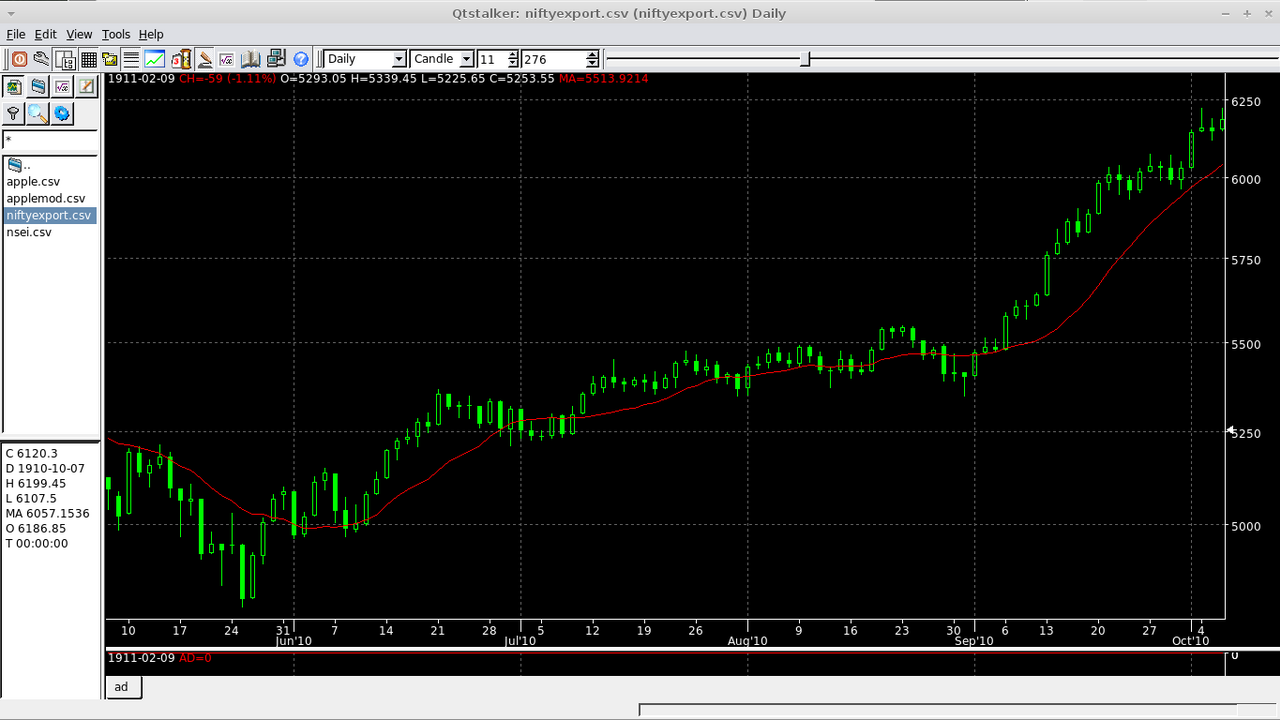
The takeaway from a chart like the one above is simple: higher lows on the VN-Index since the spring, rising volume on up days, and leadership rotating among the four clusters. That is the classic footprint of an institutional accumulation phase rather than a late-stage retail chase.
Sector rotation is data-intensive to follow in real time. Fund flows, foreign ownership changes, and block trades all leave traces in exchange data before they show up in prices. Teams that monitor sector-level turnover shares week over week were positioned in construction names well before the public investment story became consensus. The consensus VN-Index target for July sits above 1,900 points, and it explicitly requires Q2 earnings to confirm the macro narrative.
What could push the VN-Index past 1,900 points?
Three forces dominate the VN-Index bull case that brokerage research desks are publishing for July and August. None of them is exotic, and all of them are measurable in public data.
Earnings confirmation from the Q2 season
The July consensus target above 1,900 points is conditional. With GDP at 8.18% and credit up 7.41% year-to-date, bank and industrial profits should show clear flow-through in Q2 reports. If reported earnings disappoint, the VN-Index loses its fundamental fuel at exactly the moment valuations need support, so the reporting calendar between late July and mid-August is the single most important data window of the quarter.
The FTSE Russell upgrade timeline
FTSE Russell, the index business of the London Stock Exchange Group (LSEG), announced on October 7, 2025 that Vietnam will be reclassified from Frontier to Secondary Emerging Market status, with implementation from September 21, 2026. The decision was reaffirmed at the interim review in April 2026. Funds that track FTSE emerging market benchmarks are widely expected to direct inflows measured in billions of USD toward Vietnamese equities around the effective date.
Our deep dive on the Vietnam FTSE upgrade and what emerging market status means for financial data walks through which stocks meet the foreign ownership and liquidity screens that index inclusion demands.
Cheap money staying cheap
With the refinancing rate at 4.5% and the government targeting 8% full-year growth, monetary policy remains firmly pro-growth. Low deposit rates keep nudging household savings toward equities, a structural flow that has supported every leg of the 2026 VN-Index rally. Strategists treat a stable rate outlook as the baseline scenario behind a 1,900-point test; a surprise tightening would force that assumption to be rewritten quickly.
What could hold the market back below 1,900?
Every rally carries its own risk list, and this one is no exception. Four items feature in nearly every strategy note published this month.
- Bond maturities. H2 2026 brings a heavy corporate bond maturity schedule, concentrated among leveraged property developers. A visible default would hit sentiment across the whole market.
- Earnings concentration. Banks contribute a large share of index-level profits. Disappointments at two or three major lenders would ripple through the entire benchmark.
- External demand. Vietnam's growth model is export-heavy. Weaker global demand or new trade frictions would slow the manufacturing engine behind the GDP print.
- Leveraged positioning. Fast rallies tend to build margin debt at securities firms, and leveraged positioning amplifies any correction once it starts.
None of these risks changes the structural story for the VN-Index. They define the difference between a straight line to 1,900 and a choppy path there, which is why professional desks pair the macro view with position-level monitoring data instead of choosing between them.
How do foreign flows move the VN-Index?
The VN-Index is the capitalization-weighted benchmark of every stock listed on HOSE. It launched on July 28, 2000 with a base value of 100 points and just two listed companies, and it now spans hundreds of tickers across banking, real estate, consumer, industrial, and technology sectors. Because weighting follows market value, the behavior of the thirty largest names, tracked separately as the VN30, effectively steers the headline number.
Foreign investors matter to that math in three ways. They concentrate in large caps, so their flows hit the VN-Index where the weights are heaviest. They face sector-specific foreign ownership limits, for example a 30% cap at banks, so incremental foreign demand chases a limited free float. And a growing share of foreign money is passive: it tracks index families such as FTSE and MSCI mechanically, buying whatever enters the benchmark.
That is why the FTSE reclassification is more than a label. When Vietnam formally joins the Secondary Emerging universe in September 2026, passive trackers must buy the VN-Index constituents that enter their benchmarks, regardless of their view on valuation. Active managers benchmarked to emerging markets will also need a Vietnam position for the first time, even if only to stay neutral. Foreign room data, which measures how much of each stock's foreign limit remains available, becomes a core screening field in that world.
How do investors use market data during a rally?
Fast markets reward preparation over reaction, and preparation is fundamentally a data problem. The workflows below are the ones we see most often among DataCore's institutional subscribers when the VN-Index approaches a round-number milestone.
- Screening. Filtering the full Ho Chi Minh (HOSE) and Hanoi (HNX) exchange universe for earnings growth, leverage, and liquidity thresholds before the crowd arrives at the same short list of names.
- Monitoring. Standing alerts on ownership changes, credit events, and disclosure filings for portfolio names, so surprises arrive as structured notifications rather than headlines.
- Validation. Cross-checking a broker's story against primary financial statements and registry data before committing capital to it.
DataCore's Company Intelligence Service supports all three workflows with financial statements, credit metrics, ownership data, and corporate action histories delivered via API and dashboard. Teams that want to evaluate the coverage can start with a free trial of the company data service, and pair it with CashStream for cash flow and obligation monitoring.
FAQ: quick answers for busy readers
What is the VN-Index and why does it matter?
The VN-Index is the benchmark equity index of the Ho Chi Minh Stock Exchange (HOSE), Vietnam's primary stock exchange. It tracks all listed stocks on HOSE and is the most widely referenced indicator of overall Vietnamese market sentiment, used by foreign and domestic institutional investors to assess country-level risk and return.
Why is Vietnam's 8.18% GDP growth rate notable?
Most major economies are growing at 1% to 3% in 2026. Vietnam's 8.18% H1 figure places it among the fastest-growing large emerging markets globally, driven by manufacturing exports, FDI inflows, and domestic consumption recovery. It also puts Vietnam on track to exceed the government's official 8% full-year growth target.
How does the SBV's 4.5% policy rate compare regionally?
As of mid-2026, Vietnam's 4.5% refinancing rate sits below Indonesia (5.75%) and the Philippines (6.5%), and broadly in line with Thailand. It reflects the SBV's pro-growth stance, keeping real borrowing rates accommodative and supporting equity valuations through a lower discount rate.
What is Decree 200/2026 and how does it affect bond investors?
Decree 200/2026/ND-CP, effective June 5, 2026, governs private corporate bond placements. Key changes: an issuer's total debt cannot exceed five times equity; convertible bonds issued by public companies move to a faster registration process; and transparency requirements for investor protection are strengthened.
Is the 1,900-point forecast investment advice?
No. The 1,900-point figure is a consensus VN-Index scenario published by Vietnamese brokerage research desks, conditional on Q2 earnings and stable policy settings. Index forecasts are analyst opinions with wide error bars, not recommendations. This article reports the data and the reasoning; investment decisions require professional advice tailored to your own situation.
Where can I find company-level financial data for Vietnamese stocks?
DataCore's Company Intelligence Service provides financial statements, credit metrics, ownership data, and corporate action histories for listed and unlisted Vietnamese companies, available via API and subscription dashboard for institutional investors and analysts.
Key takeaways
- The VN-Index reclaimed the 1,800 level in a single session on July 17, 2026, closing at 1,804.24 with turnover concentrated in the VN30, a pattern consistent with institutional buying.
- H1 2026 GDP growth of 8.18%, credit growth of 7.41% year-to-date, and a 4.5% policy rate form the macro tripod under the rally.
- Decree 200/2026 reshapes the bond market while Q2 placements hit VND 214 trillion; H2 maturities are the stress point to watch.
- The FTSE Russell upgrade, effective from September 21, 2026, adds a structural foreign-flow catalyst behind the 1,900-point conversation.
- Whether the VN-Index clears 1,900 in July is a forecast, not a fact: Q2 earnings are the confirmation trigger, and company-level data is how professionals will verify the story.
Sources
- General Statistics Office of Vietnam (GSO), Socio-economic situation report for Q2 and H1 2026, July 2026
- State Bank of Vietnam (SBV), policy rate and credit growth statistics, June and July 2026
- Ho Chi Minh Stock Exchange (HOSE), market statistics for the July 17, 2026 trading session
- FTSE Russell (LSEG), Country Classification announcement upgrading Vietnam to Secondary Emerging status, October 7, 2025
- CNBC, FTSE Russell confirms Vietnam's emerging market status, April 8, 2026
- Vietnam Law Magazine, From pioneer to leader: Vietnam's stock market hits 25-year milestone, July 2025
- Government of Vietnam, Decree 200/2026/ND-CP on private placement of corporate bonds, effective June 5, 2026






Để lại một bình luận
You must be logged in to post a comment.