
TL;DR: New Q1 2026 cybersecurity data shows that 2.56% of Vietnamese small and medium enterprises (SMEs) were hit by ransomware attacks during the quarter - part of a broader 3.51% rate across Southeast Asia. More alarming than the volume is the tactic: cybercriminals are increasingly using "double extortion" (tong tien kep), where they both encrypt a company's data and threaten to publicly release sensitive information. This makes the damage of a successful attack far worse than data loss alone. This ransomware Vietnam SME 2026 analysis covers the double extortion threat and what Vietnamese businesses must do now to protect their data from ransomware Vietnam SME 2026 attacks.
Ransomware Vietnam SME 2026: What Are the Latest Ransomware Numbers?
According to cybersecurity research published by Vietnamnet on July 17, 2026, Q1 2026 saw 3.51% of SMEs across Southeast Asia experience ransomware attacks. Vietnam's rate came in at 2.56% - below the regional average, but cybersecurity researchers emphasized that this figure likely undercounts the true impact due to widespread underreporting. Many Vietnamese SMEs avoid disclosing breaches to protect their reputation or because they lack clear reporting obligations.
The trend that concerns researchers most is not the raw percentage but the evolution of the attack method. Classic ransomware encrypts your files and demands payment for the decryption key. Double extortion goes further: attackers copy your data before encrypting it, then threaten to publish it on dark web leak sites if you refuse to pay. This means that even companies with solid backups - who can restore their systems without paying - still face the threat of a damaging data leak.
What Is Double Extortion and Why Is It More Dangerous?
Double extortion fundamentally changes the risk calculation for affected businesses. Under the old ransomware model, a company with reliable backups could simply restore their systems and refuse to pay. Under double extortion:
- Customer data exposure: Attackers may threaten to publish customer personal data, triggering regulatory violations under Vietnam's Personal Data Protection Decree (PDPD) and reputational damage.
- Financial data leaks: Internal financial records, contracts, and pricing data published publicly can cause direct competitive harm.
- Business partner notification obligations: If customer or partner data is compromised, the breached company may have legal obligations to notify those parties - adding cost and complexity even if no ransom is paid.
- Second ransom demands: Some threat actors send a second extortion demand directly to customers whose data was stolen, compounding the harm to the original victim.
Which Sectors in Vietnam Face the Highest Ransomware Risk?
Ransomware actors target organizations with sensitive data, limited security budgets, and high pressure to restore operations quickly. In Vietnam's SME landscape, the highest-risk sectors include:
- Financial services and lending: Customer financial data is highly valuable on dark web markets. Fintech companies, microfinance lenders, and insurance agents are attractive targets.
- Retail and e-commerce: Large customer databases with payment information and purchase history.
- Healthcare and clinics: Patient records carry high extortion value due to their sensitivity.
- Logistics and supply chain: Operational disruption pressure means companies often pay quickly to restore systems.
For companies in these sectors, identity verification is a critical layer of defense. DataCore's eKYC Service provides enterprise-grade identity verification that reduces the risk of unauthorized access at the authentication layer - one of the most common entry points for ransomware operators.
Four Practical Steps to Reduce Ransomware Risk
- Implement multi-factor authentication (MFA) everywhere. Most ransomware entry points are compromised credentials. MFA eliminates the value of a stolen password. Pair this with strong identity verification at the point of customer onboarding using a service like DataCore's eKYC Service.
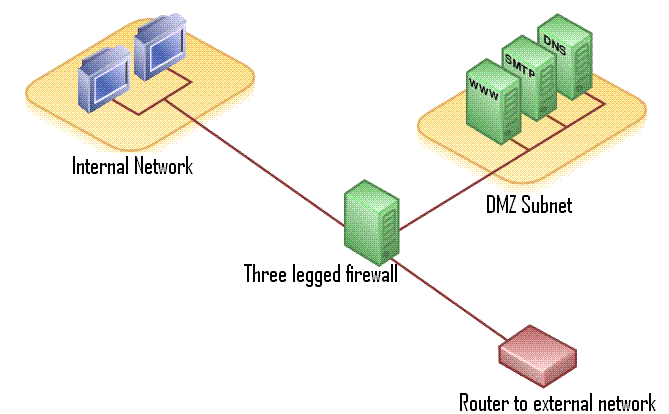
- Segment your network. If ransomware does get in, network segmentation limits how far it can spread. Keep customer data systems isolated from internal operations systems.
- Back up your data - and test your backups. A backup you have never tested is a backup you cannot trust. Run quarterly restore drills. Remember: backups protect against encryption but not against the publication threat in double extortion.
- Know what data you hold. You cannot protect what you do not know you have. Conduct a data inventory to understand what sensitive information exists in your systems, where it is stored, and who has access. Use DataCore's Company Intelligence Service to verify the legitimacy of business partners before sharing sensitive operational data with them.
Understanding Double Extortion: Why Paying the Ransom No Longer Ends the Attack
The ransomware threat facing Vietnamese SMEs in 2026 is fundamentally different from the ransomware threat of five years ago. Traditional ransomware attacks followed a simple model: encrypt the victim's files, demand payment in cryptocurrency, and restore access upon payment (sometimes). The threat was straightforward, and the calculus - pay or lose your data - was painful but simple.
Double extortion changes that calculus completely. In a double extortion attack, cybercriminals first exfiltrate copies of sensitive data from the victim's systems before encrypting the local files. They then demand payment under a two-stage threat: pay to get the decryption key (traditional ransomware), AND pay a separate demand or the exfiltrated data will be published on "leak sites" - dark web forums where stolen data from non-paying victims is posted publicly.
Even if the victim pays the first demand, the attackers can return with a second demand backed by the threat to publish the stolen data. Some criminal groups have gone further to a "triple extortion" model, adding a third threat to launch a distributed denial-of-service (DDoS) attack against the victim while negotiating.
For Vietnamese SMEs, the data publication threat creates consequences that extend far beyond the immediate operational disruption of encrypted files. If customer data is published, the company faces potential legal liability under Vietnam's personal data protection regulations (Decree 13/2023/ND-CP on personal data protection). If business partner data is published, it can damage commercial relationships and competitive position. If financial data or trade secrets are published, the damage to the company's competitive position may be irreversible. And unlike encrypted data - which can be restored if the victim has backups - published data cannot be un-published.
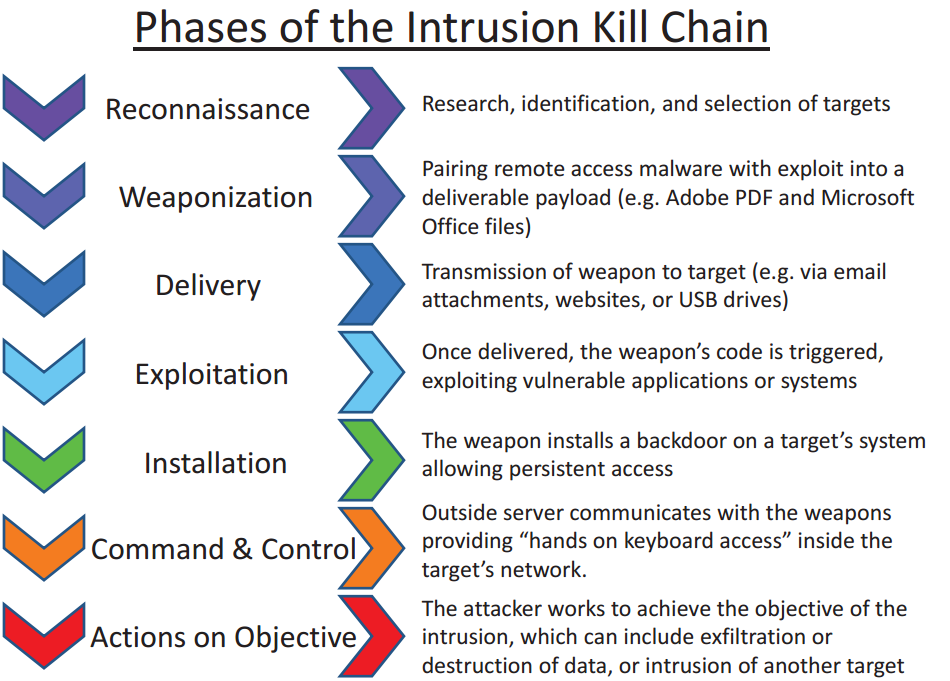
The cybercriminal groups driving this trend in Vietnam are not opportunistic amateurs. They are professional, organized criminal enterprises that conduct reconnaissance on their targets before attacking, select victims based on ability to pay and sensitivity of data, and operate with a level of operational security that makes attribution and prosecution difficult. The most active groups operating in Southeast Asia in 2025 and 2026 include affiliates of the LockBit, ALPHV/BlackCat, and Cl0p ransomware-as-a-service platforms, which provide cybercriminals with ready-made ransomware tools in exchange for a share of the ransom payments.
Why Vietnamese SMEs Are Disproportionately Vulnerable
The Q1 2026 data showing 2.56% of Vietnamese SMEs hit by ransomware does not distribute evenly across the business population. Certain types of Vietnamese SMEs face significantly higher risk, for reasons that are worth understanding if you are trying to assess your own organization's exposure.
The highest-risk Vietnamese SMEs are those that hold valuable data but have not invested proportionately in protecting it. This category includes accounting and tax advisory firms (which hold financial data for hundreds of clients), legal and notarial services (which hold sensitive legal documents and transaction records), healthcare clinics and diagnostic centers (which hold patient health data), and e-commerce and logistics companies (which hold large volumes of customer personal data including names, addresses, and payment information). These companies' data is valuable enough to justify the investment of a professional cybercriminal attack, but their IT security budgets are typically a fraction of what a large corporation would spend.
A second vulnerability factor is the prevalence of legacy and unlicensed software in Vietnam's SME sector. Outdated operating systems, unpatched software, and unlicensed productivity tools (where security updates are not available) all create exploitable vulnerabilities that ransomware groups actively scan for. Vietnam's National Cyber Security Center (NCSC) has repeatedly flagged the use of unpatched Windows operating systems and vulnerable remote desktop protocol (RDP) configurations as the most common entry points for ransomware attacks on Vietnamese businesses.
A third factor is the adoption of cloud services without corresponding security controls. Vietnamese SMEs have accelerated their adoption of cloud storage, cloud-hosted accounting software, and cloud-based communication platforms since 2020. But many have adopted these platforms without implementing appropriate access controls, multi-factor authentication, or data backup procedures. A compromised cloud account can give attackers access to far more data than a compromised on-premise server - and the data exfiltration that enables double extortion is far easier from a cloud environment without access controls than from a well-segmented on-premise network.
A Practical Ransomware Preparedness Checklist for Vietnamese SMEs
The good news about ransomware is that it is a well-understood threat with well-established defenses. The basics of ransomware preparedness are not expensive or technically complex. They require consistent implementation rather than sophisticated technology.
The most important single defense is offline backup. Ransomware attacks are effective because they encrypt your local data and any directly connected or network-accessible backups. If your backup is physically offline (an external drive disconnected from the network) or in a cloud backup service with immutable retention (where backups cannot be deleted or modified by anyone with regular account access), a ransomware attack becomes a business continuity problem rather than a catastrophic data loss event. Vietnam's NCSC recommends the 3-2-1 backup rule: three copies of your data, on two different types of media, with one copy stored offline or offsite.
The second critical defense is multi-factor authentication (MFA) on every external-facing account and service. Email, cloud storage, accounting software, banking portals, and remote access tools should all require a second factor (a code from an authenticator app, not just an SMS) in addition to a password. MFA prevents attackers from using stolen or guessed passwords to access your systems - and most ransomware attacks begin with exactly this kind of credential compromise rather than a sophisticated technical exploit.
The third defense is software patching. Operating systems, email clients, web browsers, and productivity software should all be kept up to date with security patches. Microsoft releases patches for Windows on the second Tuesday of each month; most attacks against unpatched Windows systems exploit vulnerabilities that were patched weeks or months before the attack. Keeping software current is the simplest and most cost-effective security control available to Vietnamese SMEs.
Beyond these basics, Vietnamese SMEs should consider incident response planning - knowing in advance who to call and what to do in the first hours of a ransomware attack. Vietnam's NCSC operates a 24/7 incident response hotline (1800 599 907) that can provide immediate guidance. Having a clear incident response plan, even a simple one-page document outlining the first ten steps to take, significantly reduces the chaos and poor decisions that often make ransomware incidents worse than they need to be.
For DataCore's customers in the financial services and data analytics sectors, ransomware preparedness has an additional dimension: protecting the confidentiality and integrity of the financial and organizational data that is central to their business value. A ransomware attack that exposes customer financial data is not just an operational incident - it is a reputational and regulatory event that can permanently damage a financial data company's credibility. DataCore's eKYC Service and Company Intelligence Service are built on data infrastructure that includes multiple layers of security controls, access restrictions, and audit logging designed to protect the data that our customers trust us to secure.
Frequently Asked Questions about Ransomware and Data Security in Vietnam
What percentage of Vietnamese SMEs were hit by ransomware in Q1 2026?
According to cybersecurity research reported by Vietnamnet on July 17, 2026, 2.56% of Vietnamese SMEs experienced ransomware attacks in Q1 2026. The Southeast Asia regional average was 3.51%.
What is double extortion ransomware?
Double extortion is a ransomware tactic where attackers both encrypt a company's data and steal a copy of it, then threaten to publish the stolen data if the ransom is not paid. This makes even companies with backups vulnerable to reputational and regulatory damage.
What are the legal implications of a ransomware attack in Vietnam?
Under Vietnam's Personal Data Protection Decree (PDPD, Decree 13/2023/ND-CP), organizations that experience a data breach affecting personal data may have obligations to notify affected individuals and regulatory authorities. A double extortion attack that results in customer data being published can trigger these obligations.
How does identity verification help prevent ransomware?
Most ransomware attacks begin with compromised credentials - a stolen password used to log into a company's systems. Strong identity verification, including biometric eKYC for customer-facing systems and MFA for internal systems, reduces the value of stolen credentials and closes the most common ransomware entry points.
The Cyber Insurance Landscape for Vietnamese SMEs in 2026
Ransomware preparedness is increasingly intersecting with cyber insurance - a product category that remains nascent in Vietnam but is growing rapidly as awareness of cyber risk increases. Vietnamese SMEs that have taken concrete preparedness steps (offline backups, MFA, patching programs, incident response plans) are in a stronger position to obtain cyber insurance coverage at reasonable premiums. Insurance companies underwriting cyber risk in Southeast Asia look for exactly these controls when assessing premium rates and coverage limits.
It is important to understand what cyber insurance does and does not cover. A well-structured cyber policy can cover the costs of incident response (including forensic investigation and data recovery), regulatory notification and response (if personal data is exposed, Vietnamese regulations under Decree 13/2023 require notification to affected individuals and the authorities), and business interruption losses during the recovery period. However, many policies have evolved in response to the ransomware epidemic to exclude or limit coverage for ransom payments themselves, particularly for attacks where the victim failed to implement the basic security controls (MFA, patching, backups) specified in the policy terms.
For Vietnamese financial services companies and data businesses, cyber insurance is increasingly a board-level conversation rather than just a procurement decision. Investors, partners, and regulators are beginning to ask about cyber risk management practices as part of due diligence. A documented cyber risk management program - including preparedness controls, insurance coverage, and tested incident response procedures - is becoming a competitive differentiator for Vietnamese companies working with international partners and investors in the data and fintech sectors. DataCore maintains such a program as part of our commitment to the security of the data infrastructure we provide to our customers.

The ransomware Vietnam SME 2026 threat landscape is evolving rapidly. Every ransomware Vietnam SME 2026 incident report confirms the same pattern. The ransomware Vietnam SME 2026 statistics are alarming: 2.56% of businesses affected in just one quarter. Understanding the ransomware Vietnam SME 2026 threat means understanding double extortion. The ransomware Vietnam SME 2026 attackers are professional and well-resourced. The ransomware Vietnam SME 2026 defense playbook is clear: backup, patch, authenticate. Every ransomware Vietnam SME 2026 victim shares a common failure: underestimating the ransomware Vietnam SME 2026 risk before the attack.
Ransomware Vietnam SME 2026 statistics: 2.56% of Vietnamese SMEs were hit in Q1 2026. Every ransomware Vietnam SME 2026 victim faces the same choice: pay or lose data. The ransomware Vietnam SME 2026 double extortion model means even backups won't fully protect you. The ransomware Vietnam SME 2026 attackers publish stolen data if ransom is unpaid. The ransomware Vietnam SME 2026 threat actors are professional criminal groups. The ransomware Vietnam SME 2026 average ransom demand is rising. The ransomware Vietnam SME 2026 attack surface includes email, VPN, and unpatched software. The ransomware Vietnam SME 2026 defense framework starts with zero-trust architecture.
The ransomware Vietnam SME 2026 response checklist: (1) Backup data offline - ransomware Vietnam SME 2026 operators cannot encrypt what they cannot reach. (2) Patch all systems - ransomware Vietnam SME 2026 exploits known vulnerabilities. (3) Enable MFA - ransomware Vietnam SME 2026 attacks often start with stolen credentials. (4) Train staff - ransomware Vietnam SME 2026 phishing is the primary entry vector. (5) Get cyber insurance - ransomware Vietnam SME 2026 costs include downtime, legal fees, and notification costs. The ransomware Vietnam SME 2026 threat is real. DataCore's eKYC Service reduces ransomware Vietnam SME 2026 identity attack surfaces.
Bottom line: the ransomware Vietnam SME 2026 threat is not going away. Every ransomware Vietnam SME 2026 attack follows the same playbook. Disrupt the playbook with ransomware Vietnam SME 2026 defenses built on zero-trust, MFA, and verified identity infrastructure from DataCore.
Related Articles on the DataCore Blog
Further reading: WAIC 2026: AI Governance and Vietnam's Data Industry | Vietnam's First Carbon Exchange: What Data the Market Needs | Vietnam Hosts the International AI Olympics for the First Time
Want data like this on your own watchlist? DataCore's Company Intelligence Service gives you verified financial, ownership, and registry data on over 2.3 million Vietnamese companies, one click away.






Để lại một bình luận
You must be logged in to post a comment.