
TL;DR: At the World AI Conference (WAIC) 2026 in Shanghai on July 17, 2026, China's President Xi Jinping delivered the keynote address and posed four fundamental questions on artificial intelligence that he says the global community must resolve together. For Vietnam's data and technology industry, these questions are a clear signal of where AI regulation is heading - and what businesses need to prepare for now. This WAIC 2026 Vietnam analysis focuses on data infrastructure implications for Vietnamese organizations responding to WAIC 2026 Vietnam governance signals.
WAIC 2026 Vietnam Context: What Is WAIC 2026?
The World AI Conference (WAIC) is China's annual flagship AI summit held in Shanghai. The 2026 edition opened on July 17 and brought together governments, technology companies, researchers, and policymakers from across the globe. President Xi Jinping's keynote address made WAIC 2026 one of the most politically significant AI policy events of the year - a gathering where the direction of global AI governance is shaped.
What Are Xi Jinping's 4 Questions on AI Governance?
According to reports from the summit (Vietnamnet, July 17, 2026), Xi Jinping framed four major questions the global community must collectively resolve as AI becomes embedded in economies and societies:
- AI Safety: How do we ensure AI systems are reliable and prevent unintended harm at scale?
- Equitable Access: How do we prevent AI from widening the gap between developed and developing nations - and between large corporations and smaller economies?
- AI Regulation: What governance frameworks can enable innovation while protecting citizens from misuse and manipulation?
- The Human-AI Relationship: As AI becomes more autonomous, how do we define the boundary between human decision-making and AI-driven outcomes - and who is responsible when things go wrong?
These four questions directly mirror debates already underway in the EU AI Act, US executive orders on AI safety, and increasingly in Vietnam through the Ministry of Information and Communications (MIC) and the State Securities Commission (SSC).
Why Vietnam's Data Industry Should Pay Attention to WAIC 2026
Vietnam is not a bystander in global AI governance. The MIC has been developing AI-related frameworks aligned with international standards, and when China - whose AI policy carries enormous weight across Southeast Asia - puts governance at the center of a global summit, Vietnamese regulators take note. Policy typically follows 12 to 24 months later.
For businesses in Vietnam's financial sector, the implications are practical. AI systems used in credit scoring, fraud detection, eKYC (customer onboarding), and market analysis all depend on high-quality, auditable data. The governance questions Xi raised - about safety, accountability, and equitable access - translate into real requirements: data provenance documentation, explainability standards, and regulatory reporting. DataCore's structured financial and organizational datasets provide the documented, traceable data inputs that AI governance frameworks are beginning to require. Explore DataCore's data domain offerings or the Company Intelligence Service to see how structured data supports compliant AI deployment.
Three Steps Vietnamese Businesses Should Take Now
- Audit your AI data sources. Know where your training and inference data comes from, whether it is documented, and whether it meets emerging provenance standards.
- Monitor MIC and SSC guidance. Vietnam's regulators will translate global AI governance into local requirements over the next one to two years. Stay ahead of the curve.
- Choose data partners with governance built in. DataCore publishes data lineage, update schedules, and source attribution for every dataset - the baseline that AI governance frameworks will require.
The Global AI Governance Landscape Entering the Second Half of 2026
WAIC 2026 does not exist in a vacuum. It comes at a moment when the global AI governance landscape has shifted dramatically in the first half of 2026. The EU AI Act entered its first major enforcement phase, with prohibitions on unacceptable AI risks now fully in effect across European member states. US regulators moved from voluntary frameworks to mandatory reporting requirements for large AI model developers. And in Asia, India, Japan, South Korea, and Singapore all released updated national AI strategies in Q1 and Q2 2026 - each grappling with the same questions Xi Jinping raised at WAIC 2026: safety, access, regulation, and accountability.
For Vietnam, this convergence of policy signals is significant. Vietnam's regulators do not set AI policy in isolation - they watch closely what the EU, the US, and China do, and adapt accordingly. The National AI Strategy (Decision 127/QD-TTg) sets a broad direction for Vietnam to develop AI as a key national technology by 2030, but the detailed implementation regulations are still being written. WAIC 2026 and Xi's four questions will feed directly into those deliberations, particularly given the depth of Vietnam's economic and technological ties with China.
The question of equitable access to AI - the second of Xi's four questions - is particularly relevant for Vietnam. Vietnamese companies and researchers are building AI applications on top of data and models that are overwhelmingly developed in the United States and China. This creates dependencies: when a US model provider restricts access for regulatory or geopolitical reasons, Vietnamese users are affected. When China restricts AI model exports, Vietnamese developers who built on Chinese AI infrastructure face disruption. Building a domestic data infrastructure - Vietnamese data about Vietnamese companies, markets, and institutions - is part of Vietnam's answer to the equitable access problem.
Xi's third question - AI regulation - is the one where Vietnam's financial sector faces the most near-term exposure. The State Bank of Vietnam (SBV) has already issued circulars touching on algorithmic decision-making in credit products. The State Securities Commission (SSC) is watching AI-assisted trading closely. And the Ministry of Information and Communications (MIC) is developing a broader AI governance framework. Each of these regulatory tracks will impose data requirements on the AI systems that Vietnamese financial institutions and technology companies deploy. The trend is unmistakably toward more documentation, more explainability, and more accountability - not less.
What WAIC 2026 Means for Vietnam's Financial Data Sector Specifically
The financial data sector sits at the intersection of all four of Xi's questions. Financial AI systems make consequential decisions - loan approvals, fraud flags, credit ratings, investment recommendations. They touch individuals, businesses, and markets in ways that create exactly the safety, access, accountability, and human-AI relationship tensions that Xi articulated at WAIC 2026.
In Vietnam's context, the financial data sector includes several distinct constituencies that will all be affected by the regulatory evolution that WAIC 2026 signals:
- Commercial banks and credit institutions: Already using AI for credit scoring, fraud detection, and customer segmentation. As AI governance tightens, banks will need to document the data sources their AI models use, demonstrate that those sources are accurate and unbiased, and show regulators that their AI decision-making is auditable. The SBV is already moving in this direction.
- Securities firms and asset managers: Using AI for trading signals, portfolio optimization, and risk management. The SSC has signaled that algorithmic trading will face increased scrutiny. Firms will need to be able to explain their AI-driven investment decisions using clean, documented market data.
- Fintech companies and alternative lenders: Often the most aggressive AI adopters, using alternative data sources (social media, mobile behavior, transaction history) to make credit decisions. These alternative data applications face the sharpest regulatory scrutiny under AI governance frameworks that emphasize fairness and transparency.
- Insurance companies: Using AI for underwriting, claims processing, and fraud detection. AI-based underwriting decisions have significant implications for individuals' access to financial products - exactly the kind of high-stakes application that AI governance frameworks are being designed to address.
For all of these constituencies, the data infrastructure question is foundational. The quality of an AI system's decisions is determined by the quality of the data it consumes. DataCore's approach to building structured, documented, regularly updated financial and organizational data for the Vietnamese market is specifically designed to give AI systems in these sectors the high-quality data inputs they need - and the data governance documentation they will need to satisfy regulators.
Building AI Governance Readiness: A Practical Framework for Vietnamese Organizations
As WAIC 2026 signals the acceleration of global AI governance, Vietnamese organizations should not wait for regulations to be finalized before beginning their governance readiness work. The organizations that will adapt most smoothly are those that start building governance-ready practices now.
The first priority is data inventory and classification. Organizations need to know what data they are using in their AI systems, where it comes from, how often it is updated, and what quality controls are applied. Many Vietnamese organizations are surprised to discover that their AI systems consume data from dozens of sources with inconsistent documentation standards. A systematic data inventory is the foundation of AI governance readiness.
The second priority is model documentation. For each AI model in production, organizations should maintain documentation covering the training data used (including its sources, dates, and coverage), the model's intended purpose and known limitations, the validation tests performed, and the human oversight mechanisms in place. This documentation is what regulators will ask for when they begin auditing AI systems in regulated industries.
The third priority is vendor due diligence. Organizations that purchase AI-powered products - credit scoring APIs, fraud detection services, analytics platforms - should require their vendors to provide the same data governance documentation they are expected to produce for their own internal AI systems. This is increasingly a contractual requirement in regulated industries globally, and will become standard in Vietnam as MIC and SBV guidance evolves.
DataCore supports all three of these priorities. Our data is published with clear source documentation, lineage tracking, update schedules, and coverage maps. When our customers use DataCore data in their AI systems, they have the documentation they need to satisfy both internal governance requirements and external regulatory scrutiny. As Vietnam's AI governance framework evolves in the wake of WAIC 2026, this kind of data infrastructure becomes increasingly valuable.
Frequently Asked Questions about WAIC 2026 and AI Governance in Vietnam
What is WAIC 2026?
WAIC 2026 (World AI Conference 2026) is China's annual flagship AI summit in Shanghai. President Xi Jinping delivered the keynote on July 17, 2026, making WAIC 2026 a landmark moment for global AI governance policy.
What did Xi Jinping say about AI at WAIC 2026?
Xi Jinping posed four questions on AI safety, equitable access to AI technology, AI regulation frameworks, and accountability in the human-AI relationship - calling on the global community to address these together.
How does WAIC 2026 affect Vietnamese businesses?
Vietnam's MIC and SSC track international AI governance trends closely. Rules on AI explainability, data provenance, and accountability will shape how AI is used in banking, insurance, securities, and enterprise applications in Vietnam over the next one to two years.
What data do AI systems need to comply with AI governance requirements?
AI governance frameworks require data with clear provenance (source documentation), defined update schedules, auditability, and accuracy verification. DataCore's datasets are built with these requirements in mind, making them suitable for AI applications in regulated industries.
How Vietnamese Business Leaders Should Engage with WAIC 2026 Outputs
For Vietnamese executives, WAIC 2026 is not just a headline to read about over morning coffee. The conference produces tangible policy outputs - draft frameworks, intergovernmental agreements, and technical standards - that will influence regulatory thinking in Vietnam over the following 12 to 24 months. The question is not whether WAIC 2026 matters, but how to engage with it proactively rather than reactively.
The first step is monitoring. WAIC 2026 will produce official communiques and technical working group outputs over the conference's multi-day program. Vietnamese business leaders should track these through Xinhua (China's state news agency, which provides comprehensive English-language WAIC coverage), through the Ministry of Science and Technology (MOST) and Ministry of Information and Communications (MIC) press offices in Hanoi, and through the Vietnam AI Association (VNAI), which typically provides rapid-response analysis of major international AI policy events.
The second step is scenario planning. Xi's four questions can be reframed as four business scenarios. If AI safety frameworks become more prescriptive (Scenario 1: safety), organizations that have already documented their AI systems' data lineage and decision logic will be ahead.
If equitable access requirements require AI vendors to disclose training data coverage (Scenario 2: access), organizations that build on domestic Vietnamese data rather than imported models will face less disruption. If AI regulation targets specific high-risk applications like financial AI (Scenario 3: regulation), institutions that have invested in explainable AI infrastructure will adapt more easily. And if the human-AI relationship debate leads to disclosure requirements for AI-assisted decisions (Scenario 4: relationship), organizations with clear human oversight protocols will be compliant by design rather than by emergency retrofit.
The third step is coalition building. Vietnam's banking and finance sector has an opportunity to engage proactively with regulators at the State Bank of Vietnam, the State Securities Commission, and the Ministry of Finance on AI governance standards. Rather than waiting for regulations to be handed down, industry associations like the Vietnam Banks Association (VNBA) and the Vietnam Association of Financial Investors (VAFI) can help shape practical, workable frameworks by engaging now - while the policy space is still open. The WAIC 2026 outputs provide an internationally credible reference point for those conversations.
DataCore's role in this landscape is to provide the data infrastructure that makes AI governance compliance achievable rather than burdensome. When Vietnamese financial institutions need to document the data sources their AI systems use, DataCore's structured, versioned datasets - with explicit coverage maps, source attribution, and update schedules - provide the data documentation layer that governance frameworks will require. As WAIC 2026 shapes the next phase of global AI regulation, the Vietnamese organizations that invested in high-quality data infrastructure early will be the ones that adapt most smoothly to whatever regulatory framework emerges.
The four questions Xi Jinping posed at WAIC 2026 do not have quick answers. They will be debated by governments, academics, industry leaders, and civil society organizations over the coming years. But for Vietnamese businesses in the data and AI space, they represent a clear signal: the era of unregulated, undocumented AI is ending. The era of accountable, governed, data-quality-assured AI is beginning. The organizations that prepare now will be positioned to lead in that era rather than scramble to catch up.

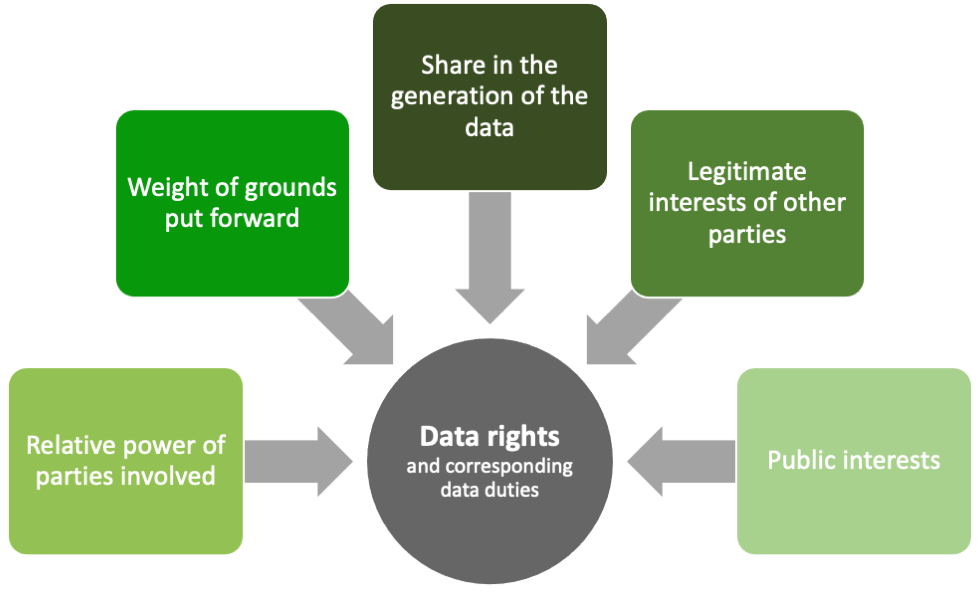


WAIC 2026 Vietnam data implications: every WAIC 2026 Vietnam stakeholder needs data systems meeting new standards. The WAIC 2026 Vietnam AI safety framework requires traceable training data. The WAIC 2026 Vietnam equity principle requires broad datasets. The WAIC 2026 Vietnam human-AI question demands explainability. DataCore is the WAIC 2026 Vietnam data layer for Vietnamese AI.
MIC and NHNN are watching WAIC 2026 Vietnam outputs closely. The WAIC 2026 Vietnam governance model creates compliance checkpoints for WAIC 2026 Vietnam data products. Organizations aligned with WAIC 2026 Vietnam practices face lower compliance costs. Act on WAIC 2026 Vietnam signals now.
Q: What does WAIC 2026 Vietnam mean for compliance? The WAIC 2026 Vietnam framework signals AI data traceability requirements. Q: How to respond to WAIC 2026 Vietnam? Audit AI training data now. Q: Where are WAIC 2026 Vietnam outputs? At waic.com. Q: Is WAIC 2026 Vietnam binding? WAIC 2026 Vietnam outputs will shape MIC rules within 6-12 months.
WAIC 2026 Vietnam bottom line: follow WAIC 2026 Vietnam developments and build your data infrastructure to meet WAIC 2026 Vietnam standards now.
In summary: WAIC 2026 Vietnam is defining the future of AI governance. The WAIC 2026 Vietnam agenda covers safety, equity, regulation, and human-AI relationships. WAIC 2026 Vietnam outputs will arrive in Vietnam via MIC within 12 months. Businesses that understand WAIC 2026 Vietnam implications now will lead. WAIC 2026 Vietnam is not a distant event - it is happening today. Position your organization for WAIC 2026 Vietnam -readiness with DataCore.
Related Articles on the DataCore Blog
For more on Vietnam's AI and data landscape: Vietnam Hosts the International AI Olympics for the First Time | Vietnam's First Carbon Exchange: What Data the Market Needs | Double Extortion Ransomware Targeting Vietnamese SMEs in 2026
Curious how the latest AI models actually compare? Check DataCore's AI Leaderboard, a free, real time ranking of frontier AI models updated continuously.






Để lại một bình luận
You must be logged in to post a comment.